18th & 19th Century American Historical Reenactments
What is an early American historical “Reenactment”?
Credit Above Photo: Wikimedia Commons Photos from below article w/Crazy Crow edits
Updated March 5, 2026
18th & 19th Century American Historical Reenactments
What is an early American historical “Reenactment”?
Credit Above Photo: Wikimedia Commons Photos from below article w/Crazy Crow edits
Updated March 5, 2026
Note the distinction made here of “18th & 19th Century American Historical Reenactments”. There are persons interested in virtually all historical eras of most countries who participate in WWI and WWII reenactments, Viking, Roman, Napoleonic Wars (i.e., Waterloo), etc. In this article, we’ll stick to the early American eras as those are the ones whose participants that Crazy Crow Trading Post supplies. A typical “reenactment” takes place over a one to three-day period, usually over a weekend (folks have real jobs). Reenactors gather and set up an encampment, using reproductions of tents, cooking equipment and camping gear from the period they represent. Each day of the reenactment, you can visit the encampment, talk with the reenactors and watch demonstrations of everything from open-fire cooking to tomahawk and knife throwing. You can learn to dance or listen to musical performances. You can also shop at a reenactment in a special area called the “sutlers’ camp.” Here you’ll find all kinds of items related to reenacting – everything from swords to tents to hand-sewn dresses.
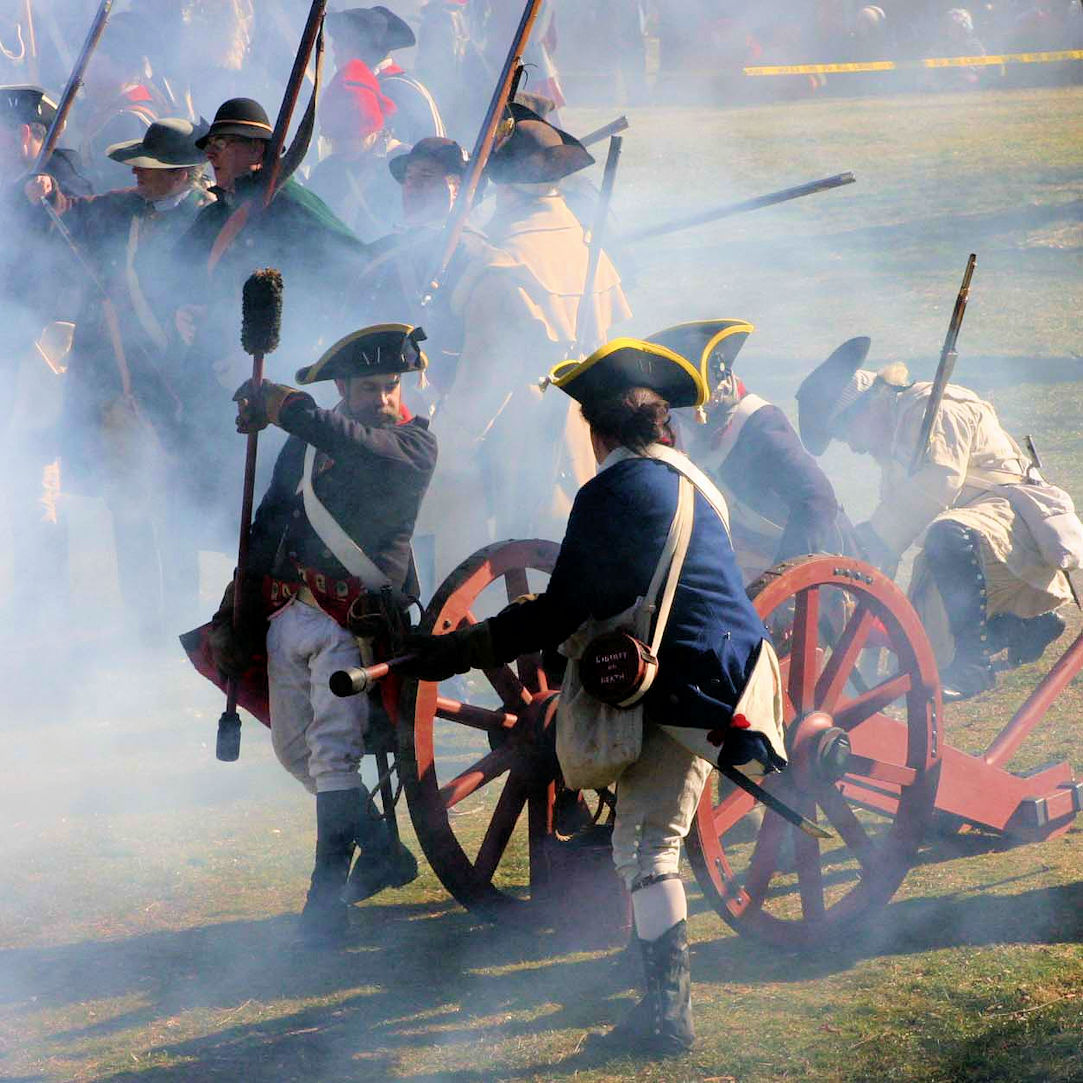
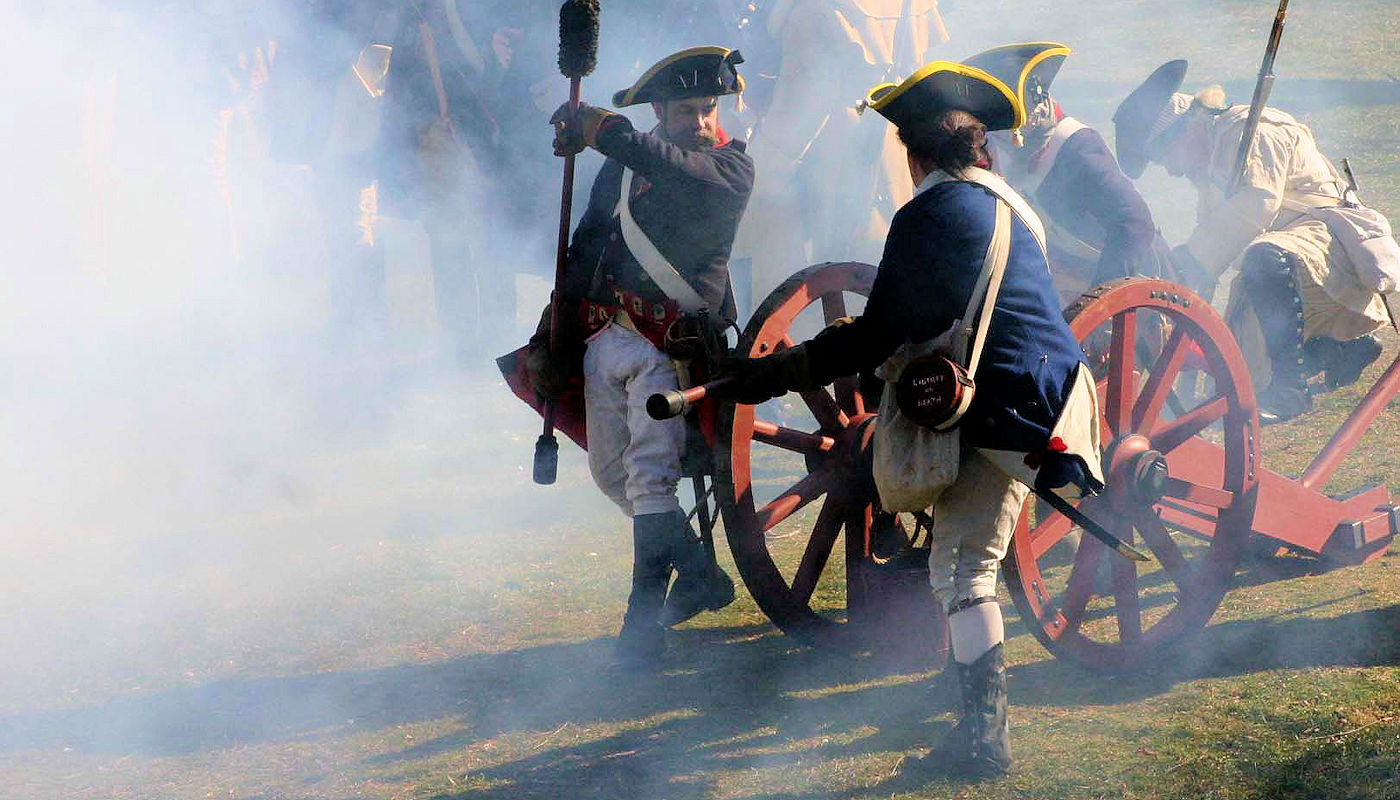
The highlight of a reenactment is usually a particular battle or historic event on which it is based. Spectators head to a field or viewing area to watch the reenactors gather and fight “the” battle. Everything is as authentic as participants can make it, from uniforms and weapons to the battle formations. Of course, the reenactors don’t fire real bullets, but they do fire their weapons, using black powder, so things can get loud and smoky.
Reenactments aren’t just for men, of course. At a typical reenactment, you’ll also see women and children in period costume. You might attend a Civil War fashion show or a colonial sewing circle. Ladies’ teas and other demonstration social events are very popular.
The “History” of Historic Reenactments
Historic “reenactment” have a long history. The Romans staged recreations of famous battles within their amphitheaters as a form of public spectacle. In the Middle Ages, tournaments often reenacted historical themes from Ancient Rome or elsewhere. Military displays and mock battles and reenactments first became popular in 17th century England. In the nineteenth century, historical reenactments became widespread, reflecting the romantic interest in the Middle Ages of the times. Medieval culture was widely admired as an antidote to the modern enlightenment and industrial age that was beginning to spread.
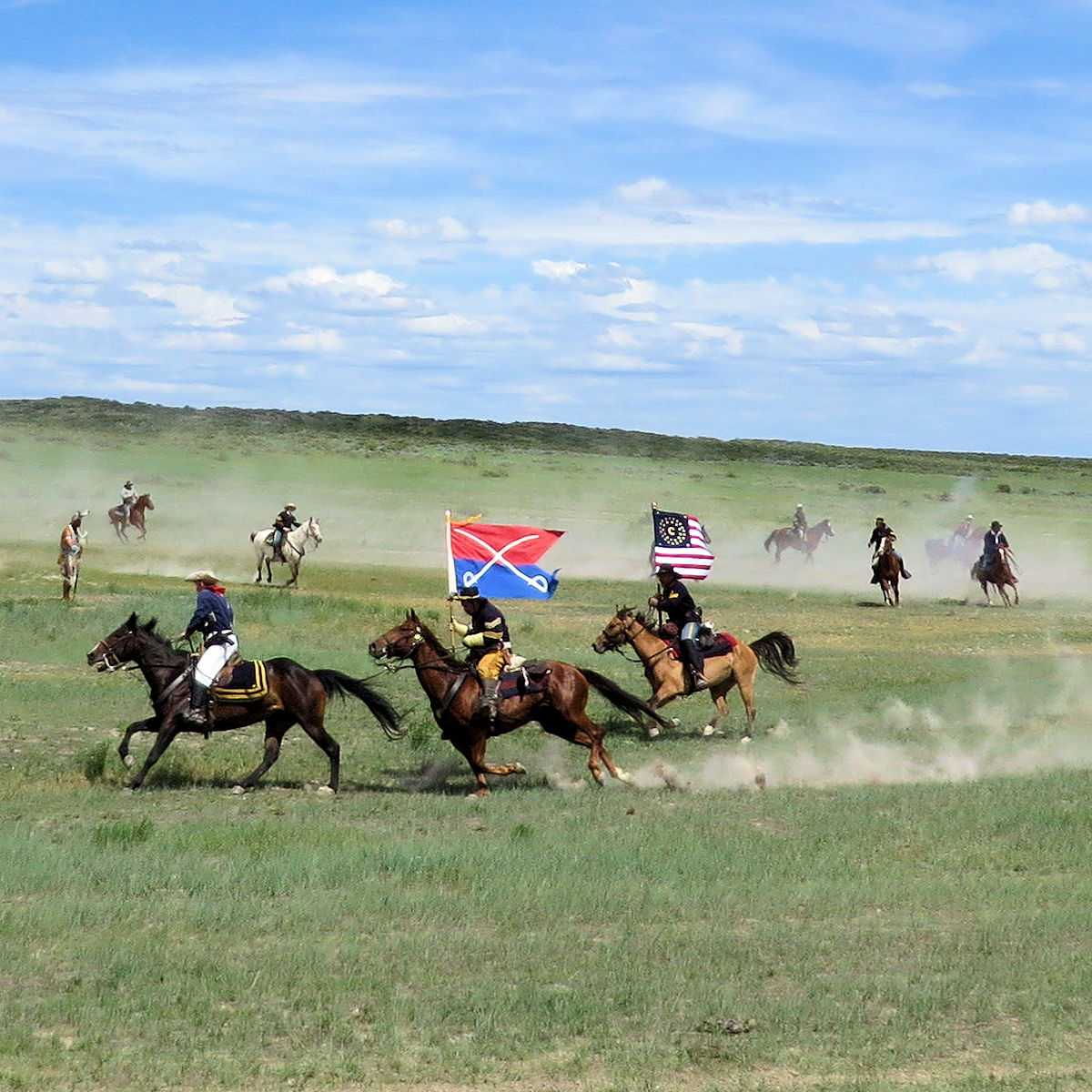
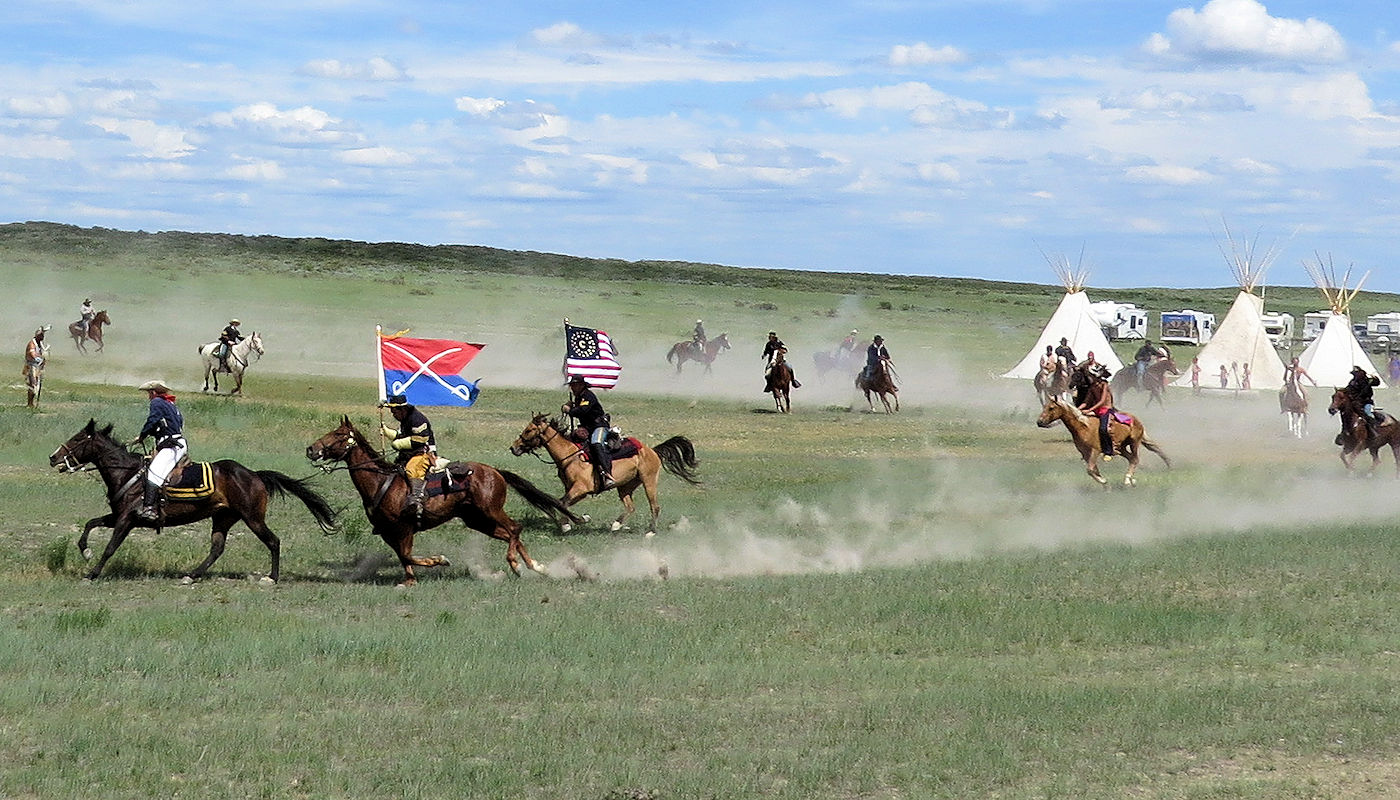
Custer’s Last Stand Reenactment 2013, near Old U.S. Hwy 87, Hardin, MT
Photo Credit: Leonard J. DeFrancisci,CC BY-SA 3.0, via Wikimedia Commons
Reenactments of battles became more commonplace in the late 19th century, both in Britain, and in America. Within a year of the Battle of the Little Bighorn, survivors of U.S. 7th Cavalry Regiment reenacted the scene as a series of still photographic poses. In America, modern reenacting is thought to have begun during the 1961–1965 Civil War Centennial commemorations. Reenacting grew in popularity during the 1980s and 1990s, due in large part to the success of the 125th Anniversary reenactment near the original Manassas battlefield, which was attended by more than 6,000 reenactors.
Many cottage industries have sprung up to provide not only the materials but also the finished product for use by reenactors. Uniforms and clothing made of hand woven, natural dyed materials are sewn by hand or machine using the sartorial techniques of the period portrayed. Crazy Crow Trading Post has developed and manufactured many of these products and accortrements. Detailed attention to authenticity in design and construction is given equally as well to headgear, footwear, eyewear, camp gear, accoutrements, military equipment, weapons and so on. These items provide the participant a realistic experience in the use of materials, tailoring and manufacturing techniques that are as close to authentic as possible.
Reenactments of battles became more commonplace in the late 19th century, both in Britain, and in America. Within a year of the Battle of the Little Bighorn, survivors of U.S. 7th Cavalry Regiment reenacted the scene as a series of still photographic poses.
In America, modern reenacting is thought to have begun during the 1961–1965 Civil War Centennial commemorations. Reenacting grew in popularity during the 1980s and 1990s, due in large part to the success of the 125th Anniversary reenactment near the original Manassas battlefield, which was attended by more than 6,000 reenactors.
Many cottage industries have sprung up to provide not only the materials but also the finished product for use by reenactors. Uniforms and clothing made of hand woven, natural dyed materials are sewn by hand or machine using the sartorial techniques of the period portrayed. Crazy Crow Trading Post has developed and manufactured many of these products and accortrements. Detailed attention to authenticity in design and construction is given equally as well to headgear, footwear, eyewear, camp gear, accoutrements, military equipment, weapons and so on. These items provide the participant a realistic experience in the use of materials, tailoring and manufacturing techniques that are as close to authentic as possible.
Popular US Reenactment Periods (chronological order)
Many cottage industries have sprung up to provide not only the materials but also the finished product for use by reenactors. Uniforms and clothing made of hand woven, natural dyed materials are sewn by hand or machine using the sartorial techniques of the period portrayed. Crazy Crow Trading Post has developed and manufactured many of these products and accortrements. Detailed attention to authenticity in design and construction is given equally as well to headgear, footwear, eyewear, camp gear, accoutrements, military equipment, weapons and so on. These items provide the participant a realistic experience in the use of materials, tailoring and manufacturing techniques that are as close to authentic as possible.
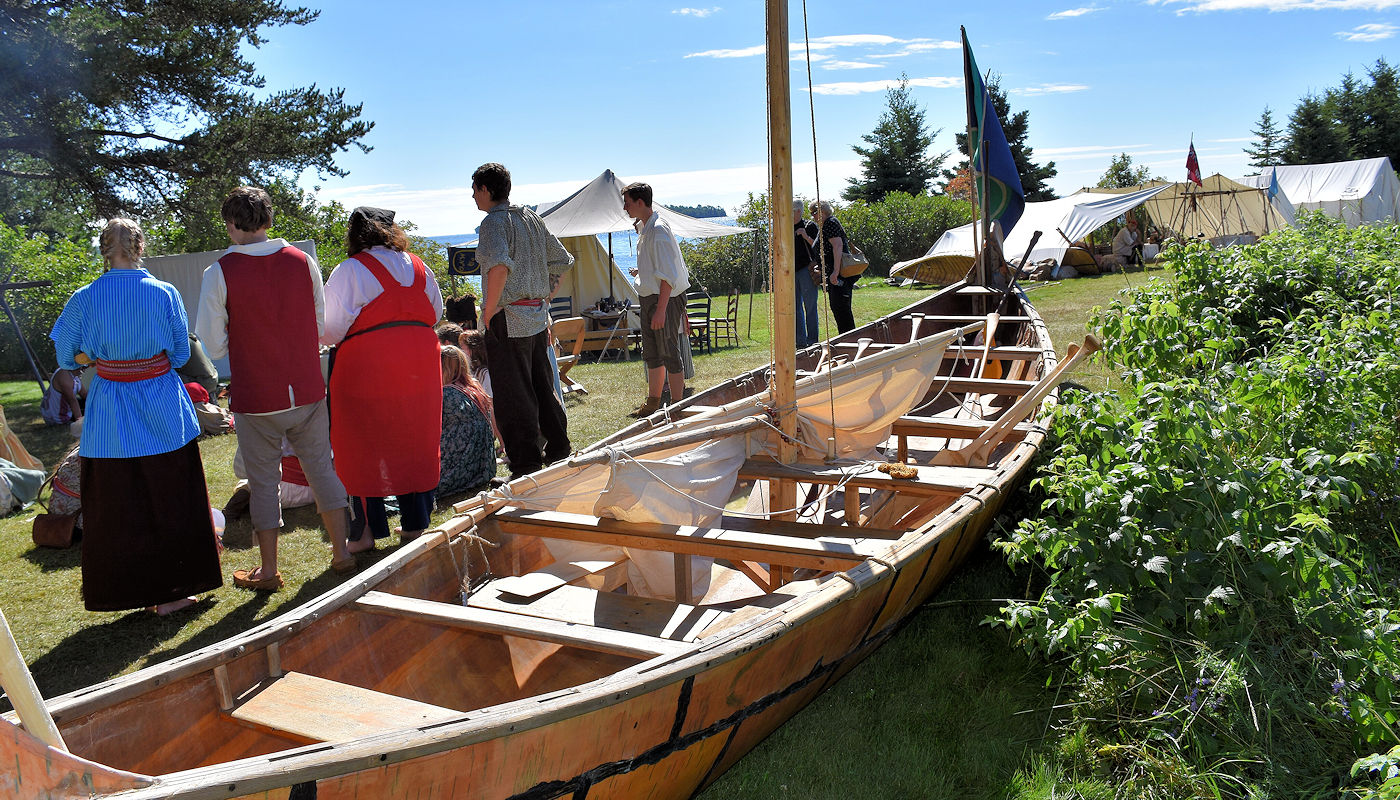
Voyageur Rendezvous: 1st of two Rendezvous Periods
In North American history, a rendezvous was a wilderness gathering that took place at established camps or river and lake junctions used by those involved in the fur trade. All of these rendezvous ultimately included a major transfer of furs and goods to be traded for furs. In North America during the fur trade era, from the 16th century to the mid-19th century, there were two distinct periods and locations that defined the Voyageur Rendezvous (late 16th century until about 1810 focused around the Great Lakes) and the Mountain Man or Buckskinner Rendezvous that most movies are famous for, though they only lasted a short period (1825-1840) and took place in the Western Rocky Mountains. What a coincidence that a Voyageur Rendezvous era of over 200 years was coming to a close at almost the same time as the ‘Mountain Man’ Rendezvous of Idaho, Utah, and Wyoming began.
Voyageur is a French word, meaning “traveler”. Voyageurs were French Canadians who engaged in the transporting of furs by canoe during the fur trade years. From the beginning of the fur trade in the 1680s until the late 1870s, the voyageurs were the blue-collar workers of the Montreal fur trade. At their height in the 1810s, they numbered as many as 3,000 men. Hired from farms and villages of the St. Lawrence Valley, most spoke French and generally could not read or write. These men agreed to work for a number of years in exchange for pay, equipment, clothing and “room and board.” Most voyageurs would start working when they were in their early twenties and continue working into their sixties. Sometimes being a voyageur was a family tradition.
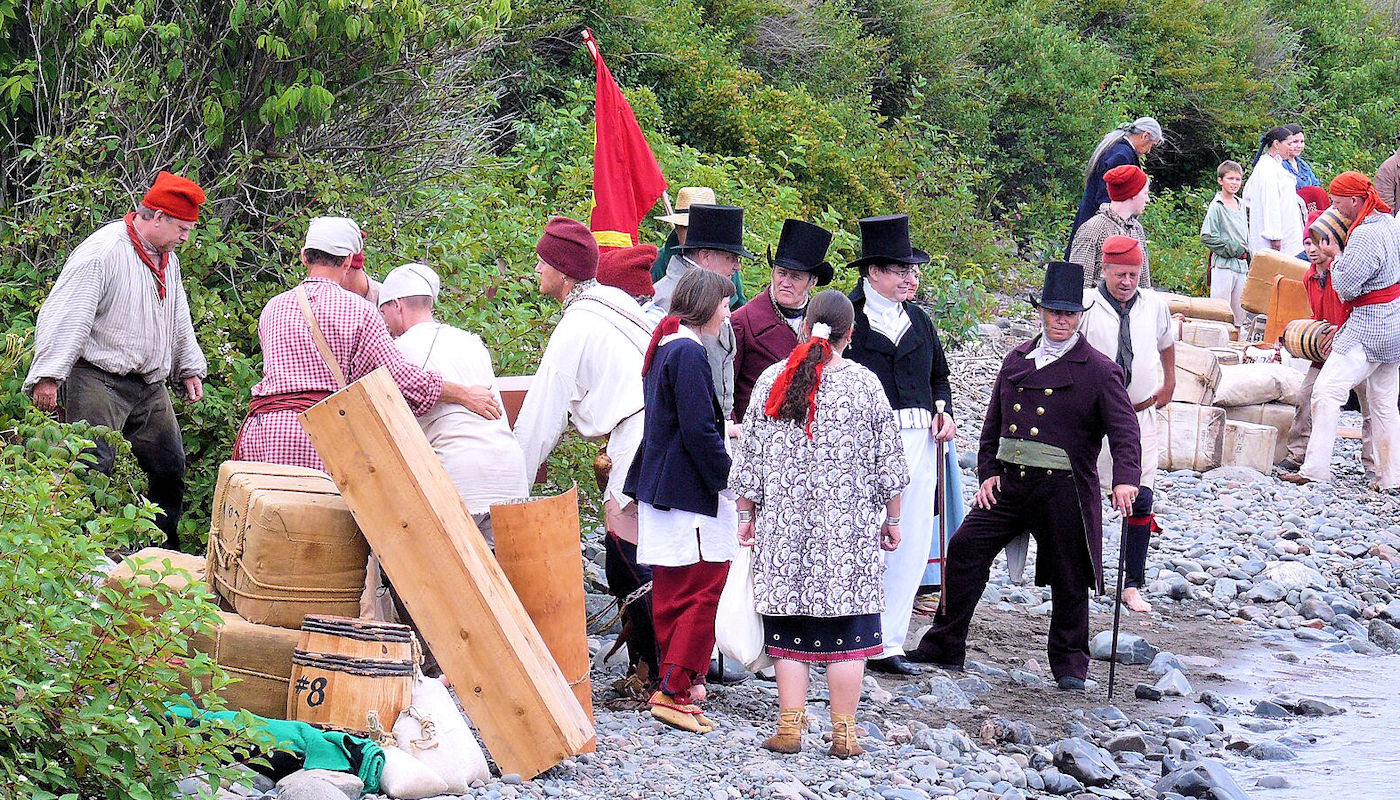
Annual Voyageur Rendezvous at Grand Portage National Monument each August
Photo Credit: English: NPS, Public domain, via Wikimedia Commons
Annual Voyageur Rendezvous at Grand Portage National Monument each August
Photo Credit: English: NPS, Public domain, via Wikimedia Commons
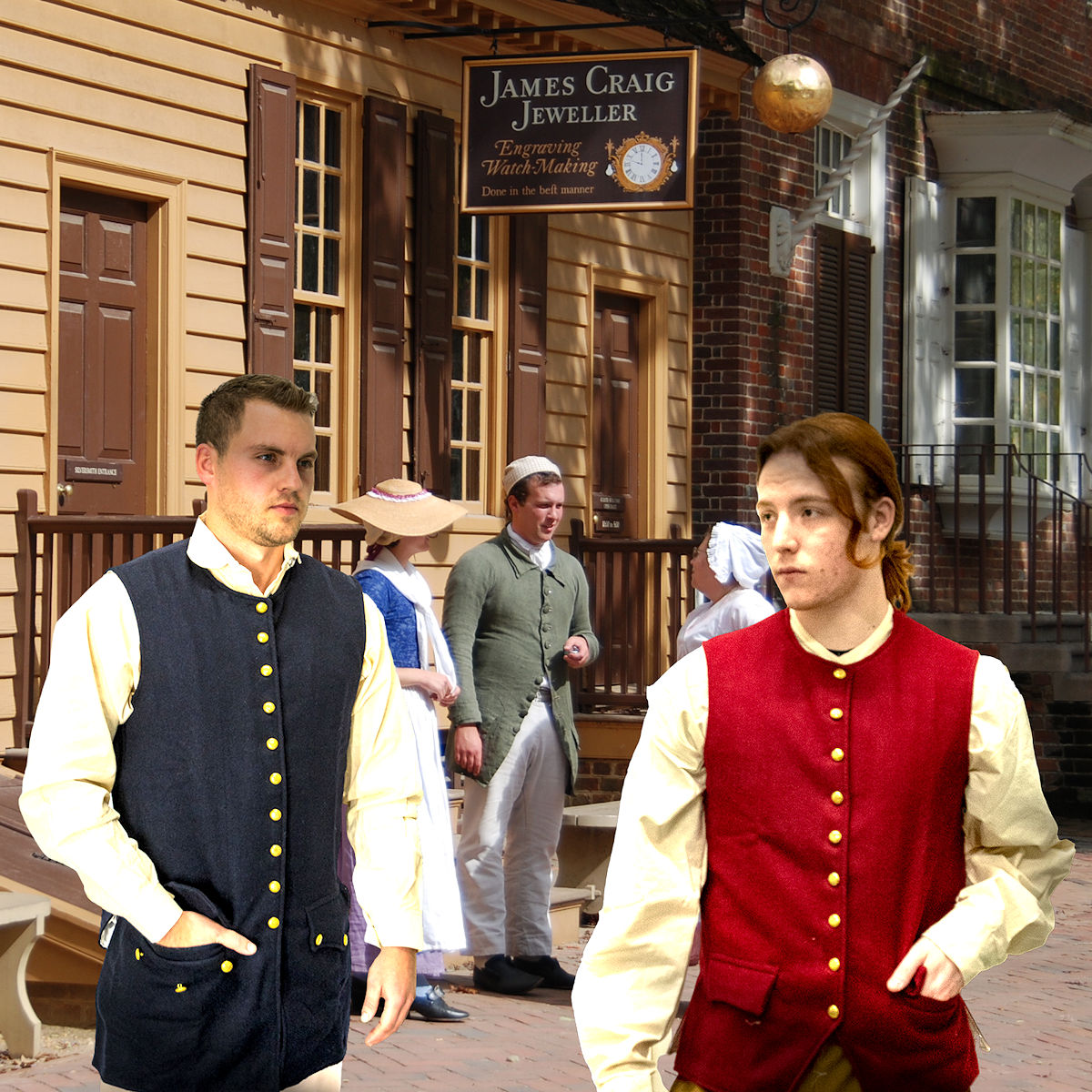
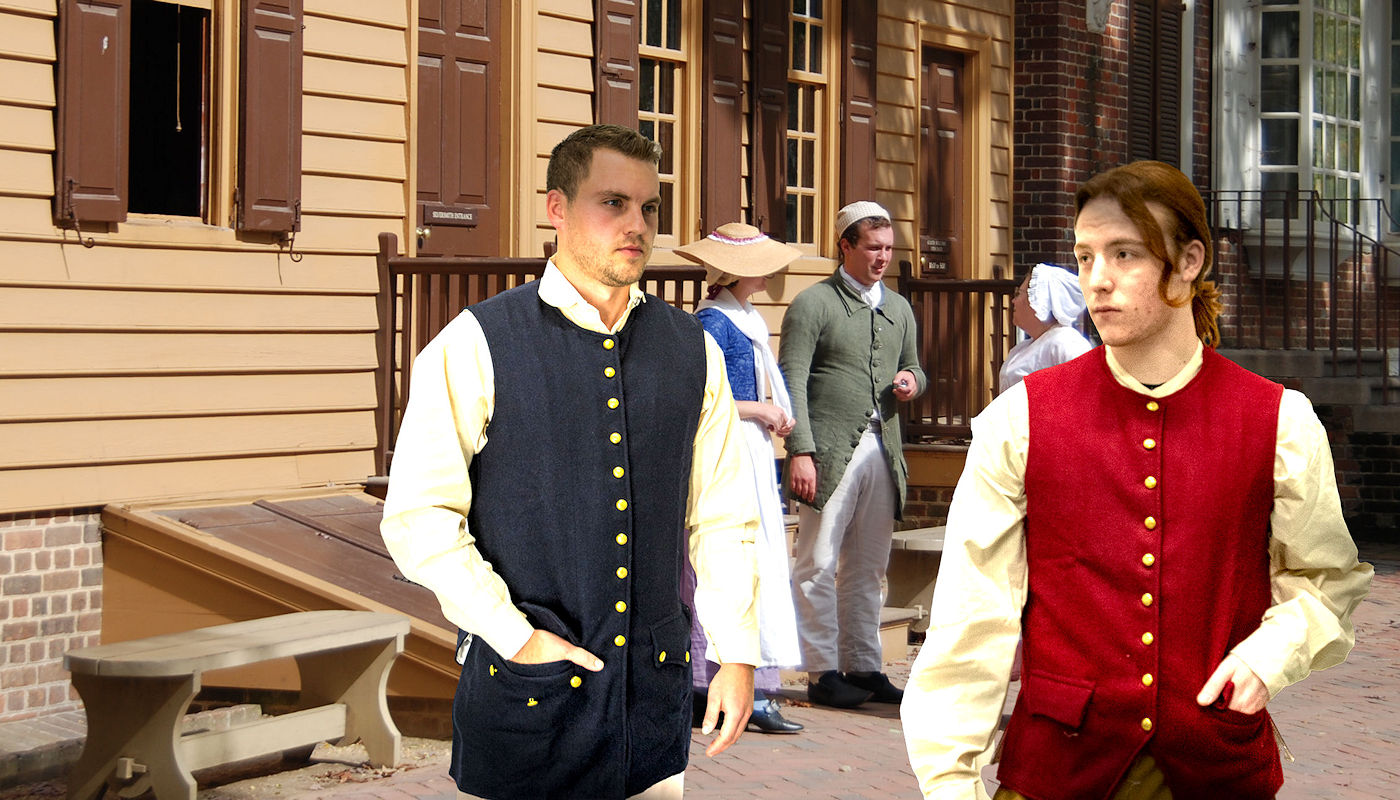
American Colonial Civilian Reenactors
Like the military reenactors of the French & Indian War, Revolutionary War, and War of 1812, fashion of civilian reenactors also follow a timeline, though perhaps more loosely. Generally, the story of American colonial clothing is the story of people who used apparel for more than modesty or protection from the elements. They selected clothing and accessories to announce status, wealth, occupation, and personality, all within the constraining limits of the time and place. Sometimes the message was evident through the form of the garment, a hoop petticoat or a sailor’s jacket, for example. More often, people relied on the nuances of fabric, tailoring, trimmings, accessories, or the accumulation of styles to speak silently on their behalf.
In early Colonial America, settlers brought with them habits and ideas in dress that were characteristic of their places of origin. However, their clothes were also influenced by the climate of the part of the country to which they had come. Many colonists thought it important to preserve class distinctions in all areas. Because of this, they passed many sumptuary laws that proscribed what members of the different classes could purchase or own; protocol in dress was a visible expression of their determination to maintain their heritage.
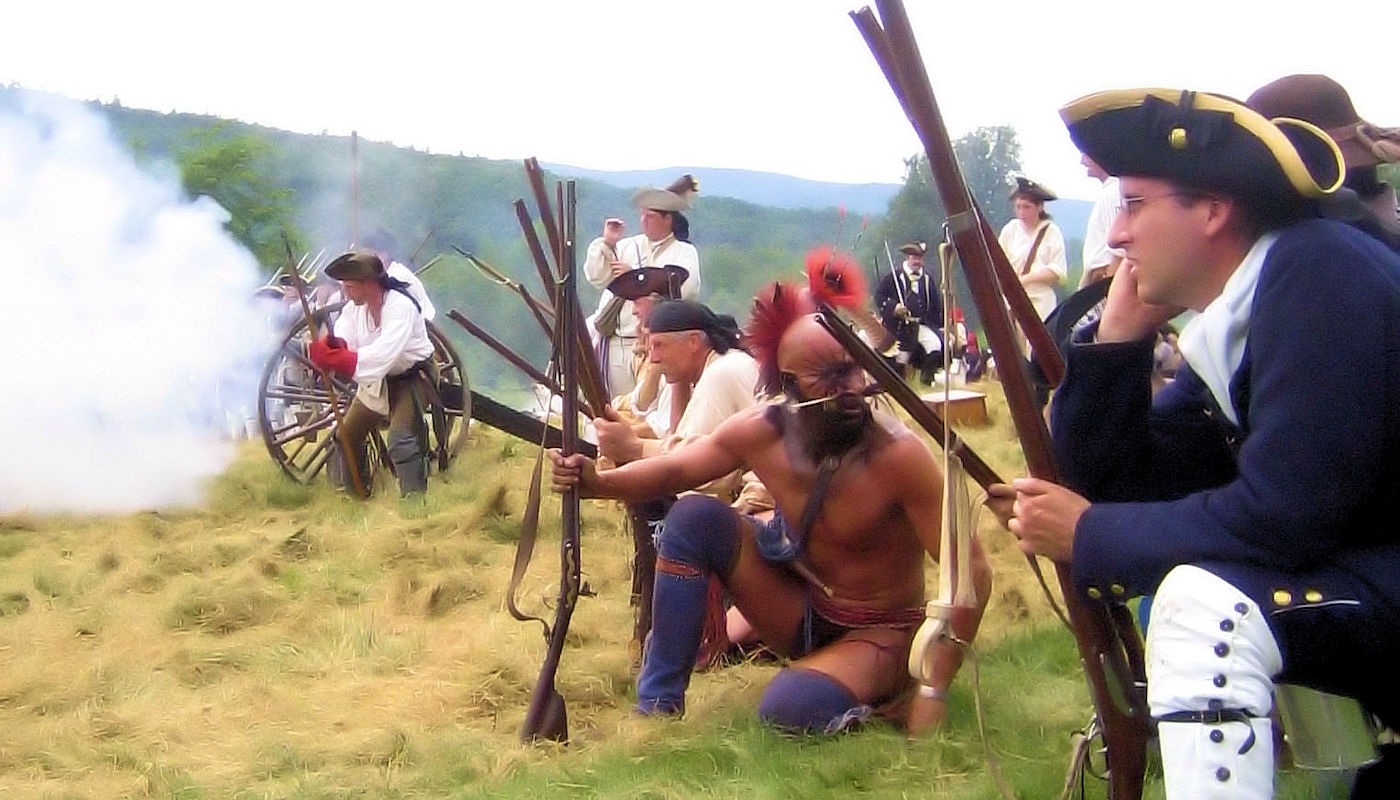
French and Indian War Reenactments
The French and Indian War (1754-1763) was the North American chapter of the Seven Years’ War. The name refers to the two main enemies of the British: the royal French forces and the various American Indian forces allied with them. The conflict, the fourth such colonial war between the kingdoms of France and Great Britain, resulted in the British conquest of all of New France east of the Mississippi River, as well as Spanish Florida.
Reenactments of battles became more commonplace in the late 19th century, both in Britain, and in America. Within a year of the Battle of the Little Bighorn, survivors of U.S. 7th Cavalry Regiment reenacted the scene as a series of still photographic poses.
French and Indian War era battle reenactment at Ft. Ticonderoga, NY
Photo Credit: See page for author, Public domain, via Wikimedia Commons
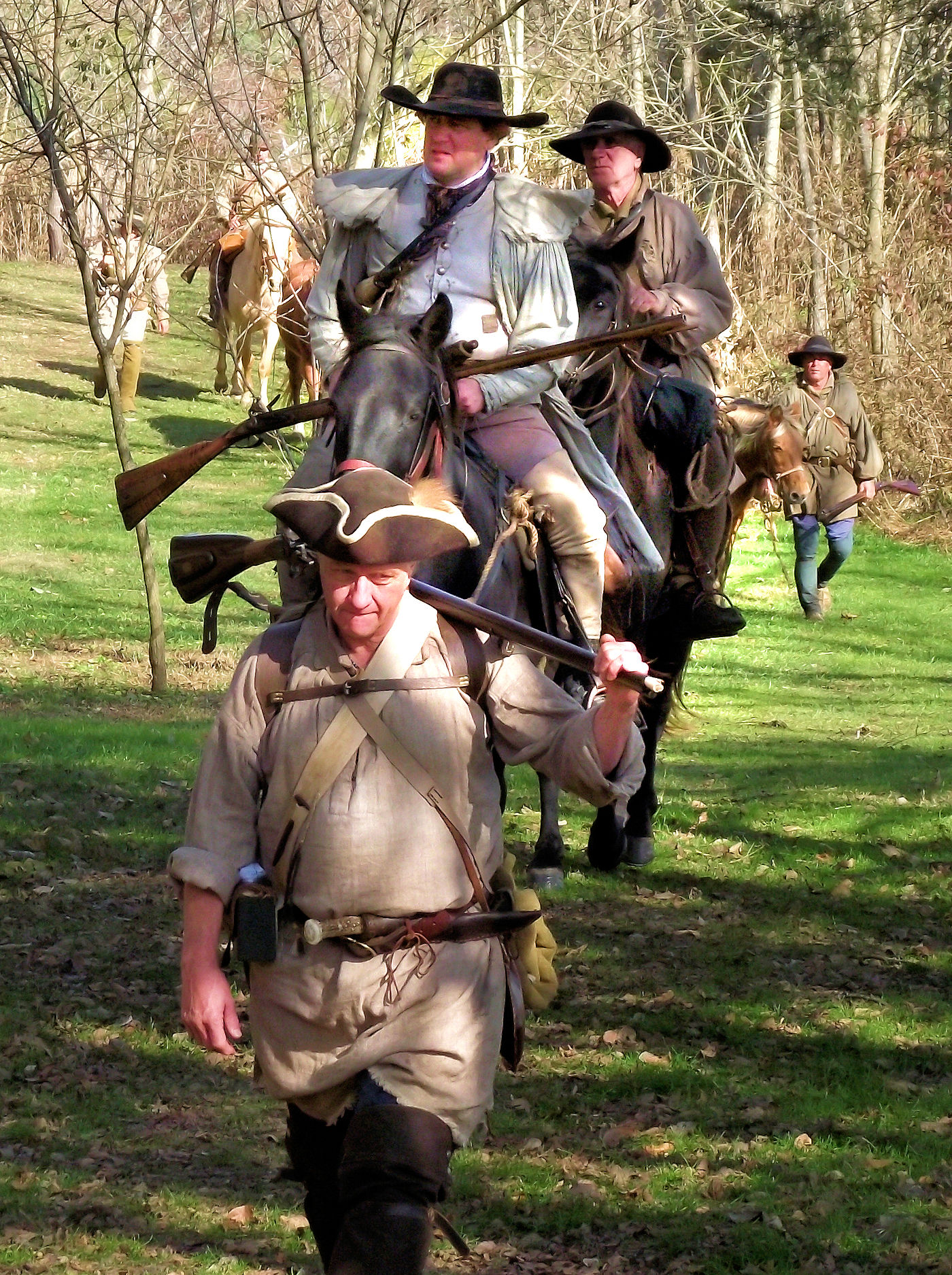
WRSP (Wilderness Road State Park) Daniel Boone Film Shoot, 2011
Photo Credit: Virginia State Parks staff, CC BY 2.0, via Wikimedia Commons
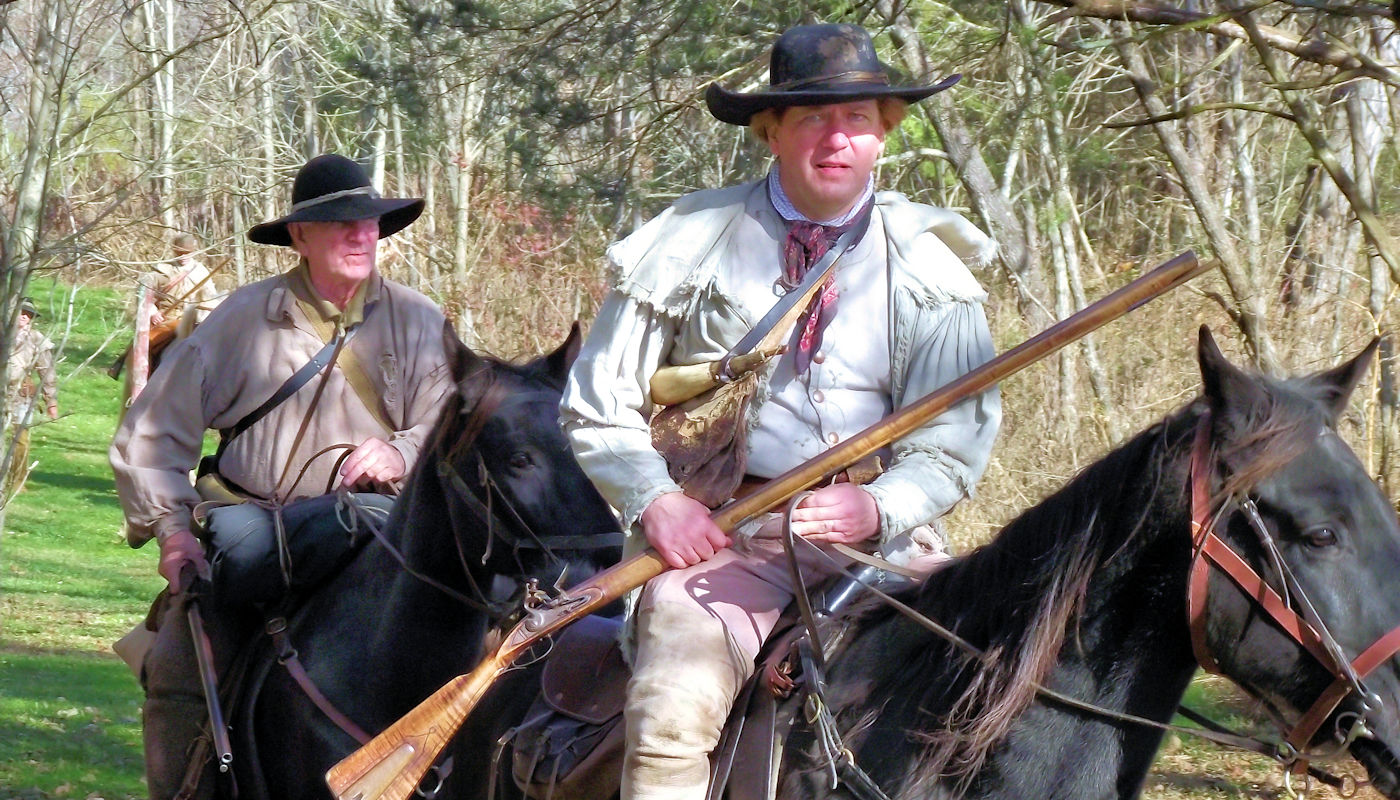
WRSP (Wilderness Road State Park) Daniel Boone Film Shoot, 2011
Photo Credit: Virginia State Parks staff, CC BY 2.0, via Wikimedia Commons
Long Hunters & Trekkers | Hunting the White Tail Deer | 1760-1775
A Long Hunter was an 18th-century American frontiersman who undertook extended expeditions—often six months to two years—into the trans-Appalachian wilderness west of the mountains. These men hunted primarily white-tailed deer for hides, explored uncharted lands, and gathered intelligence that later opened Tennessee and Kentucky to settlement. Parties ranged from two or three men (for mutual protection) to twenty or more. Most left in October, after crops were harvested, and returned in late March or early April when pelts were prime and spring planting called them home.
The era truly began after the French and Indian War ended in 1760–1763. The Treaty of Paris removed French claims from the Ohio Valley, and although the British Proclamation of 1763 tried to keep settlers east of the Appalachians, independent long hunters ignored it. They pushed through the Cumberland Gap and down the Holston and Clinch rivers, mapping routes that Daniel Boone would later widen into the Wilderness Road. Many worked for land surveyors and speculators who rushed to claim the newly “opened” territory. Their commercial focus was deer hides (white tail deer specifically) —far more abundant and marketable in the east than beaver—shipped to Europe for use in producing leather goods such as shoes, belts, and a myriad of used. A single successful hunt could yield thousands of deerskins worth a small fortune back in North Carolina and east of the Appalachians where most of these men called home.
Famous long hunters embodied the archetype. Daniel Boone led repeated hunts into Kentucky beginning in 1769, surviving capture by Shawnee and returning with detailed knowledge of the Bluegrass region. Simon Kenton, a giant of a man, rescued Boone at Boonesborough in 1777 and later scouted for George Rogers Clark. Kasper Mansker built one of the first stations in Tennessee. Elisha Walden organized some of the earliest recorded long hunts in 1761. Isaac Bledsoe and James Harrod founded permanent settlements after their hunts. George Rogers Clark himself lived off the land in the Ohio Valley in the early 1770s, honing the wilderness skills that later made him a Revolutionary War hero. These men who were long hunters knew one another as kin in many cases, hunted together on what could be multi-year expeditions, shared camps, and passed intelligence that accelerated American expansion.
While results of their ‘long hunts’ could produce substantial financial gain, for most it was fleeting. The history of the long hunters is filled with tales of their hazards:
Sidebar: The Hazards of Long Hunter Life
Long hunters operated in a world of constant peril. Beyond starvation, exposure, wild animals, and disease, one of the greatest and most repeated threats was robbery by Native warriors defending their traditional hunting grounds.
A classic example occurred in 1769 when Daniel Boone and John Stuart were surprised by a Shawnee war party led by Captain Will. The Indians seized hundreds of deerskins the pair had collected over six months but left them their guns and ammunition with a stern warning: “Go home and stay there. Don’t come here anymore, for this is the Indians’ hunting ground.”
In many documented cases, captors deliberately took the hunters’ prized Kentucky long rifles—highly accurate rifled firearms—and replaced them with smoothbore “trade guns” (fusils) of noticeably lower quality. These substitute weapons provided basic protection for the long trek home but were far less effective for hunting or long-range defense, effectively discouraging future incursions without leaving the hunters completely defenseless.
Not every encounter ended with such calculated mercy. Some long hunter parties were robbed three times over the course of a multi-year expedition, losing pelts, gear, horses, and even their superior rifles on each occasion. In at least one such case the final robbery proved fatal—the group never returned home, their fate a grim reminder that the wilderness could claim even the most experienced frontiersmen.
These incidents underscored the precarious balance on the frontier. Native groups asserted sovereignty over their lands while sometimes extending a measure of mercy, knowing that total annihilation of every hunting party could spark full-scale war with the encroaching settlers. For the long hunters, every successful hunt carried the very real risk that it could be their last.
Long Hunters were not like the Mountain Men of the Rendezvous Era of 1825-1840
Long hunters were distinct from later Rocky Mountain trappers or company traders. They operated independently or in small free bands, targeted deer rather than beaver (although they would take furs other deer when presented the opportunity), and returned east each spring rather than wintering in the mountains. They had no formal annual rendezvous like the French voyageur gatherings or the later American Fur Company events; instead, they established temporary base camps where groups divided spoils, repaired gear, and traded informally before splitting again. Travel was almost always in groups for safety against bears, weather, and Native resistance, though individuals or pairs often hunted alone once in the field. Their clothing blended European linen hunting frocks (fringed and dyed earth tones for camouflage), leather leggings, moccasins, broad-brimmed hats, and powder horns—practical gear still reproduced today for reenactors.
Their impact reached far beyond pelts. The geographic knowledge they brought back—rivers, passes, salt licks, and Indian trails—enabled the rapid settlement of Kentucky and Tennessee after the Revolutionary War. Many long hunters doubled as scouts and militia in Lord Dunmore’s War (1774) and the Revolution, defending Boonesborough, Harrodsburg, and other stations. Their presence, however, also escalated conflicts with Shawnee, Cherokee, and other nations whose hunting grounds they invaded. By the 1790s overhunting and settlement had depleted eastern deer herds, pushing the trade westward and ending the long-hunter era.
Much more to come!
In an article to come, we will delve into the era of the Long Hunter in great detail. It’s scope and importance to the fur trade in the southeastern part of America, with hundreds of mules in single pack trains following routes southeast to Charleston, helping to develop that important port and export point where most of the deer hides were destined, England.
Period Trekking is a modern phrase coined to describe a person venturing into the woods on a camping-style adventure using only items available in their chosen historical period. No group is required. While the term is recent, the practice has deep historical roots. During the American Revolutionary War, hundreds of militia undertook rapid “treks” to support distant actions. Daniel Morgan’s riflemen marched over 600 miles from Virginia to Saratoga in 1777. The Overmountain Men trekked across the Appalachians in 1780 to win the pivotal Battle of Kings Mountain. Boone himself led relief parties and scouts on long wilderness marches to defend Kentucky stations. These wartime treks—swift, self-reliant, and lightly equipped—mirror the spirit of today’s period trekking while reminding us that the skills of the long hunters were quickly adapted for military service when the new nation needed them most.
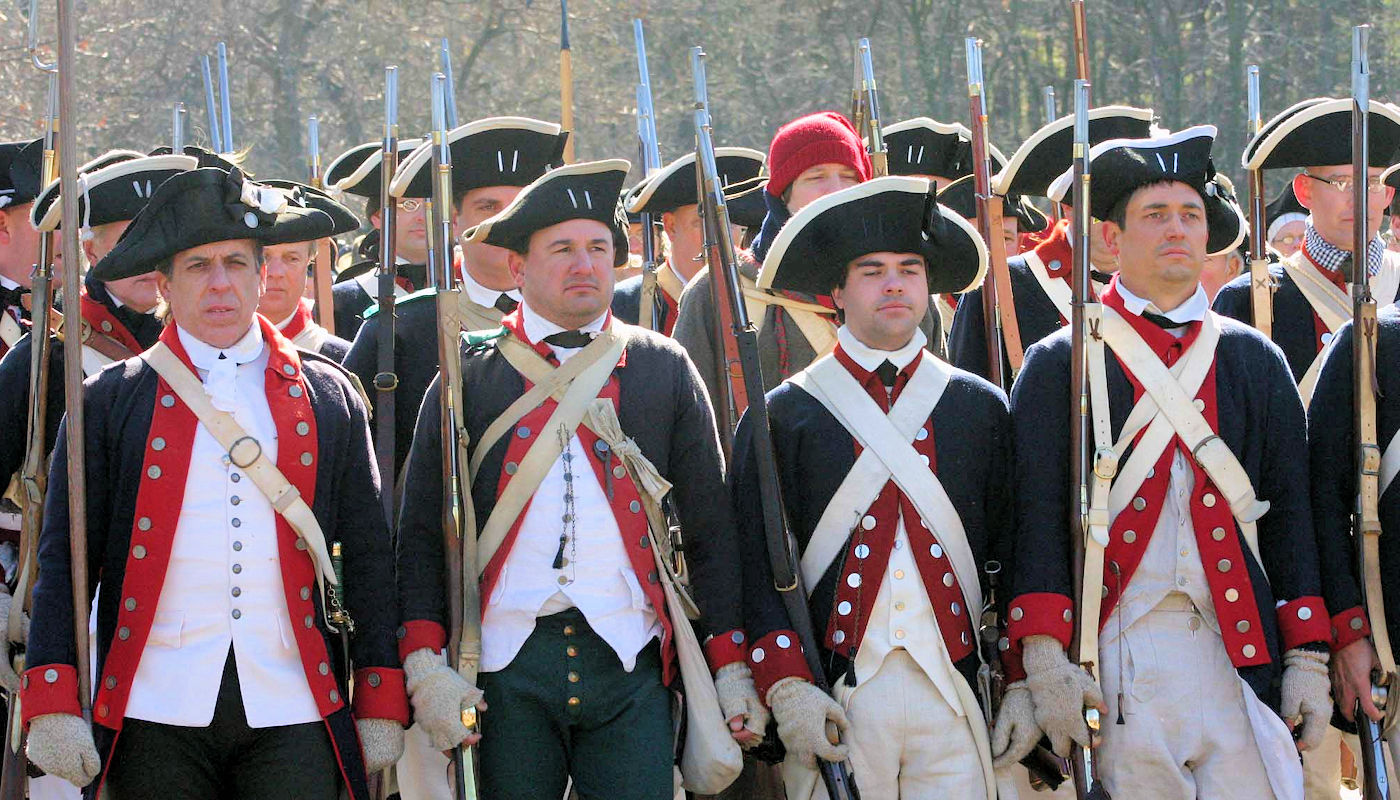
American Revolutionary War Reenactments
The American Revolutionary War (1775-1783), was the culmination of the political American Revolution, whereby the colonists overthrew British rule. In 1775, Revolutionaries seized control of each of the thirteen colonial governments, set up the Second Continental Congress, and formed a Continental Army. The following year, they formally declared their independence as a new nation, the United States of America. In early 1778, shortly after an American victory at Saratoga resulting in the surrender of an entire British army, France signed treaties of alliance with the new nation, and declared war on Britain that summer; Spain and the Dutch Republic also went to war with Britain over the next two years.
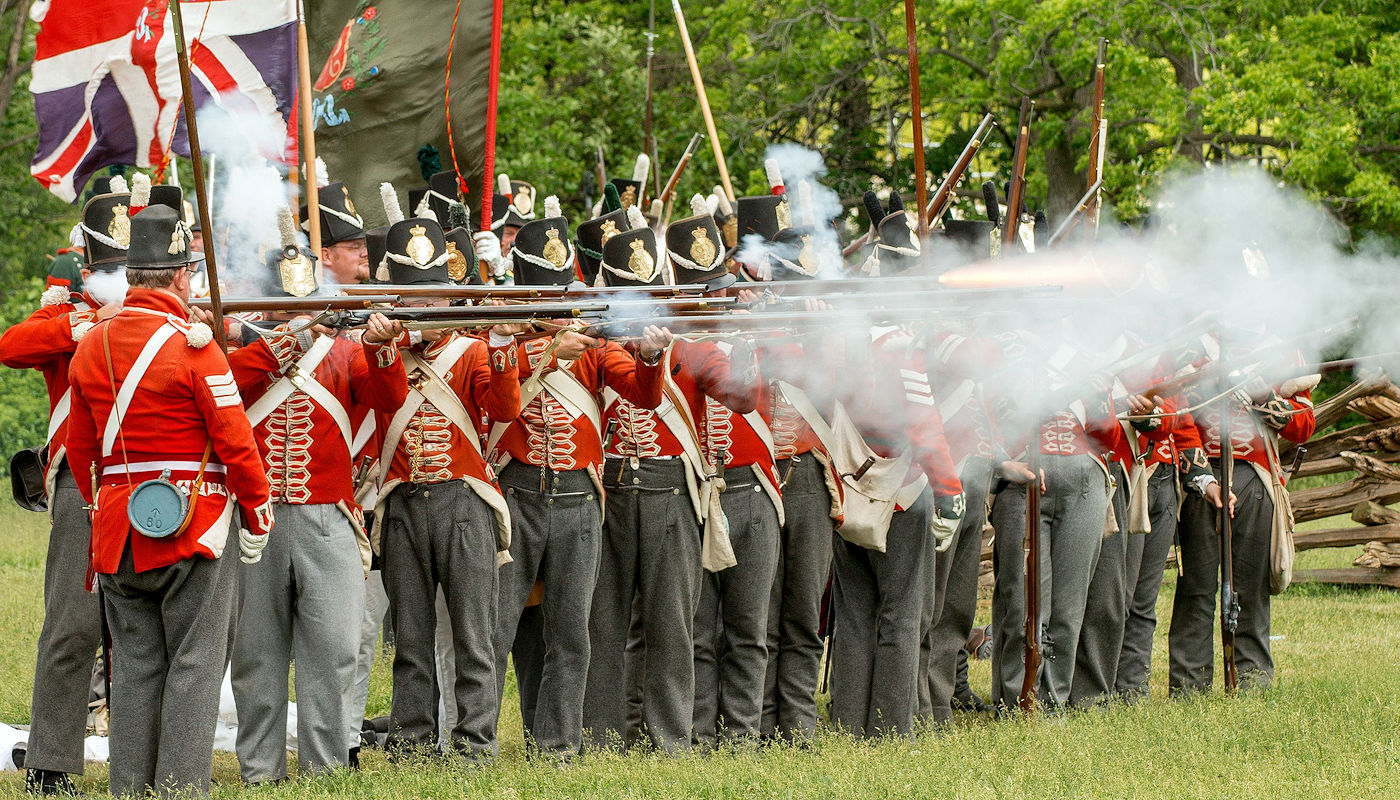
Battle of Stoney Creek Reenactment; Ontario, Canada
Photo Credit: Peter K Burian,CC BY-SA 4.0, via Wikimedia Commons
War of 1812 Reenactments (1812-1815)
The War of 1812 lasted for two-and-a-half years, between the United States and the United Kingdom, its North American colonies and its American Indian allies. The war resolved many issues which remained from the American Revolutionary War but involved no boundary changes. The United States declared war for several reasons, including trade restrictions brought about by the British war with France, the impressment of American merchant sailors into the Royal Navy, British support of Indian tribes against American expansion, outrage over insults to national honor after humiliations on the high seas and possible American interest in annexing British North American territory (part of modern-day Canada).
The nation gained a strong sense of complete independence as people celebrated their “second war of independence” with nationalism soaring after the victory at the Battle of New Orleans.
Battle of Stoney Creek Reenactment; Ontario, Canada
Photo Credit: Peter K Burian,CC BY-SA 4.0, via Wikimedia Commons
.jpg)
.jpg)
Fur Trade Era Reenactors: Rocky Mountain Rendezvous Era (1825-1840)
Early North America history centers around the fur trade. At some point, this literally involved all of North America where vast territories were explored, wars were fought, regions changed hands from one European country to another until after hundreds of years all was in American hands, and Indian cultures were changed or destroyed in the pursuit of the beaver and buffalo (among others). Despite the European and Chinese fur trade encompassing a wide variety of fur bearing animals and a much wider timeline (1590-1880), the Rocky Mountain Rendezvous (1825-1840) is often synonymous with beaver and the free-trappers and ‘company men’ who resupplied at them because of movies and pop culture.
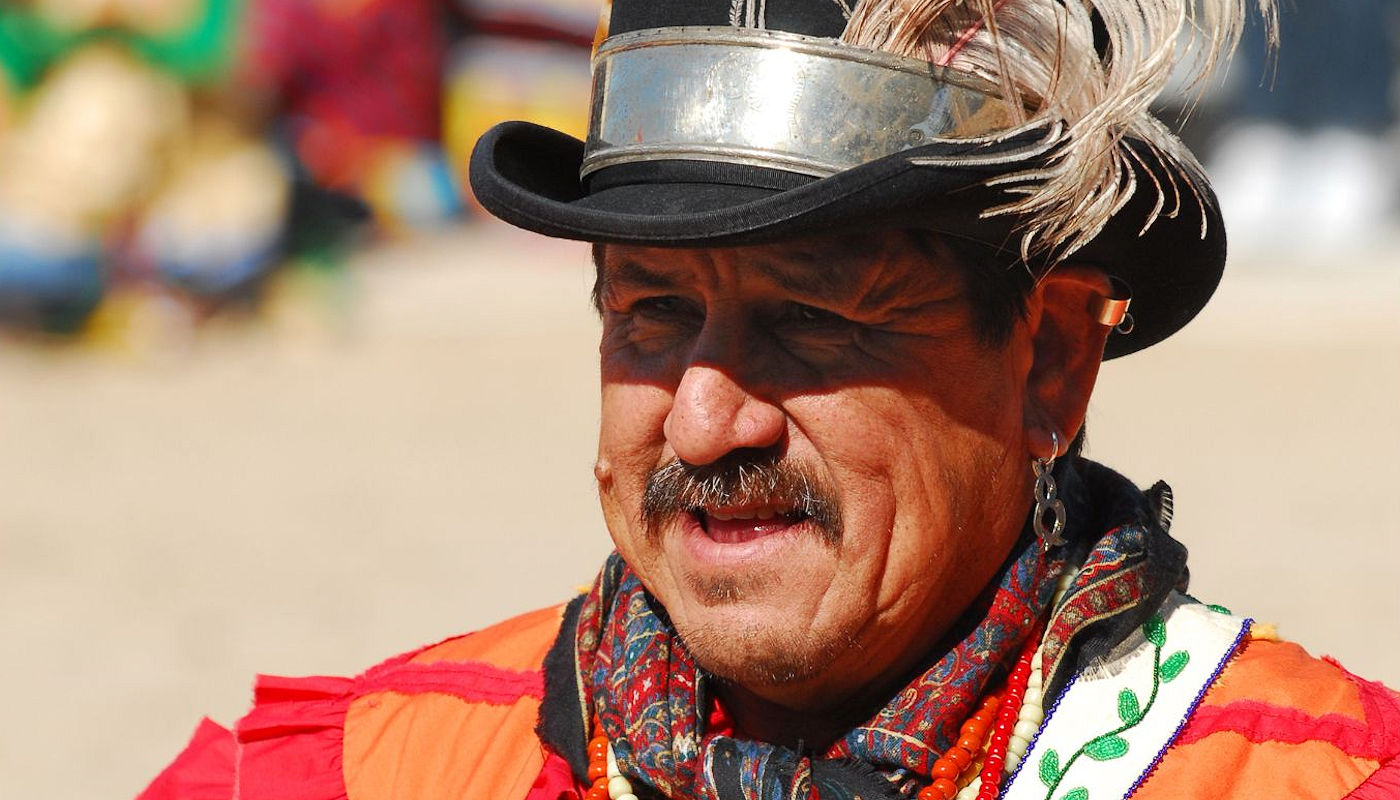
Seminole War Reenactors
Photo Credit: Canva
Seminole War Reenactments (1817-1858)
The Seminole Wars were a series of three conflicts between the United States and the Seminoles that took place in Florida between about 1816 and 18581. The First Seminole War (1817–18) began over attempts by U.S. authorities to recapture runaway Black slaves living among Seminole bands.
The Second Seminole War (1835–42) followed the refusal of most Seminoles to abandon the reservation that had been specifically established for them north of Lake Okeechobee and to relocate west of the Mississippi River.
The Third Seminole War (1855–58) resulted from renewed efforts to track down the Seminole remnant remaining in Florida.
Among the major battles that are the focus of many if not most of the Seminole War reenactments are: (Scott Massacre (1817), Dade Massacre (1835), Battle of Okeechobee (1837), Battle of Loxahatchee (1859) and others.
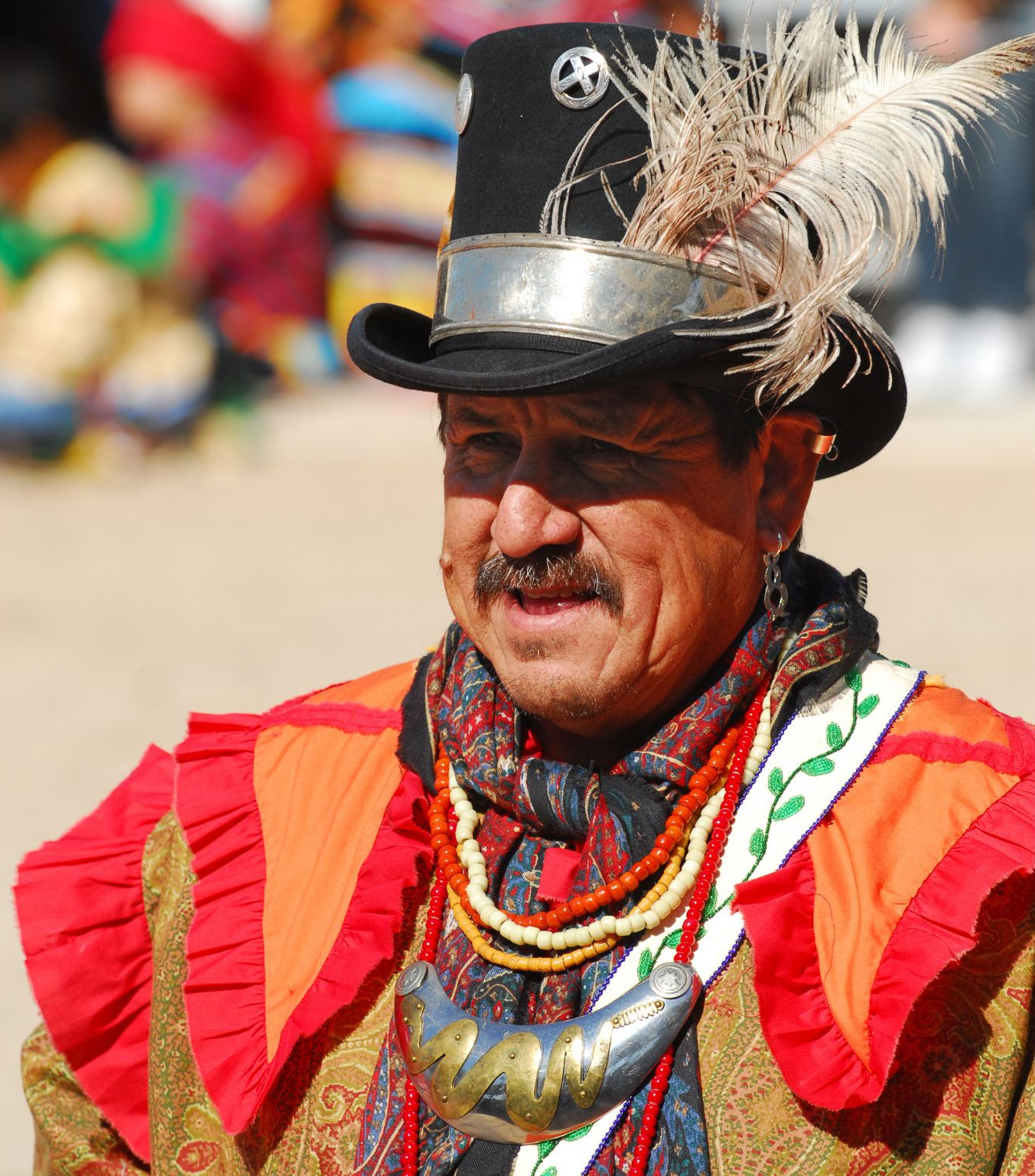
Seminole War Reenactors
Photo Credit: Canva
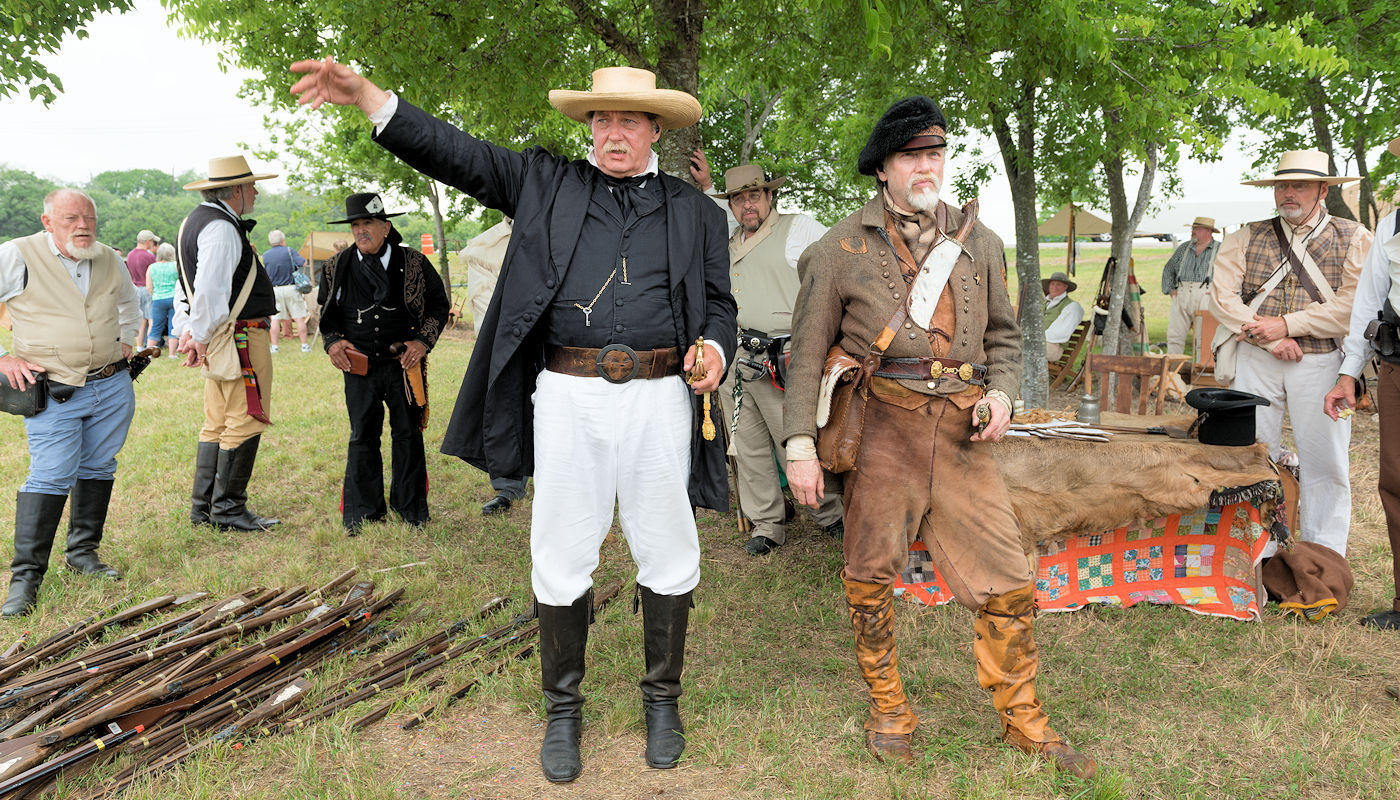
Texas Revolution Reenactments
Photo Credit: Carol M. Highsmith, Public domain, via Wikimedia Commons
Texas Revolution Reenactments (1836)
The Texas Revolution was a rebellion of colonists from the United States and Tejanos (Texas Mexicans) in putting up armed resistance to the centralist government of Mexico. The battles of the Alamo, Goliad, and San Jacinto were key events in this revolution, and reenactments are held annually to commemorate them.
The Battle of the Alamo was fought between the Republic of Texas and Mexico from February 23 to March 6, 1836. The Mexican army, led by General Antonio López de Santa Anna, launched an assault on the Alamo Mission near San Antonio de Béxar (modern-day San Antonio, Texas). All of the Texian defenders were killed.
The Goliad Massacre was an event that occurred on March 27, 1836, during the Texas Revolution. Following the Battle of Coleto Creek, Texian soldiers under Colonel James W. Fannin surrendered to the Mexican army. They were subsequently executed on orders from Santa Anna.
The Battle of San Jacinto was fought on April 21, 1836, in present-day Harris County, Texas. It was the decisive battle of the Texas Revolution. Led by General Sam Houston, the Texian Army engaged and defeated General Santa Anna’s Mexican army in a fight that lasted just 18 minutes. The Texans shouted “Remember the Alamo!” and “Remember Goliad!” as they attacked.
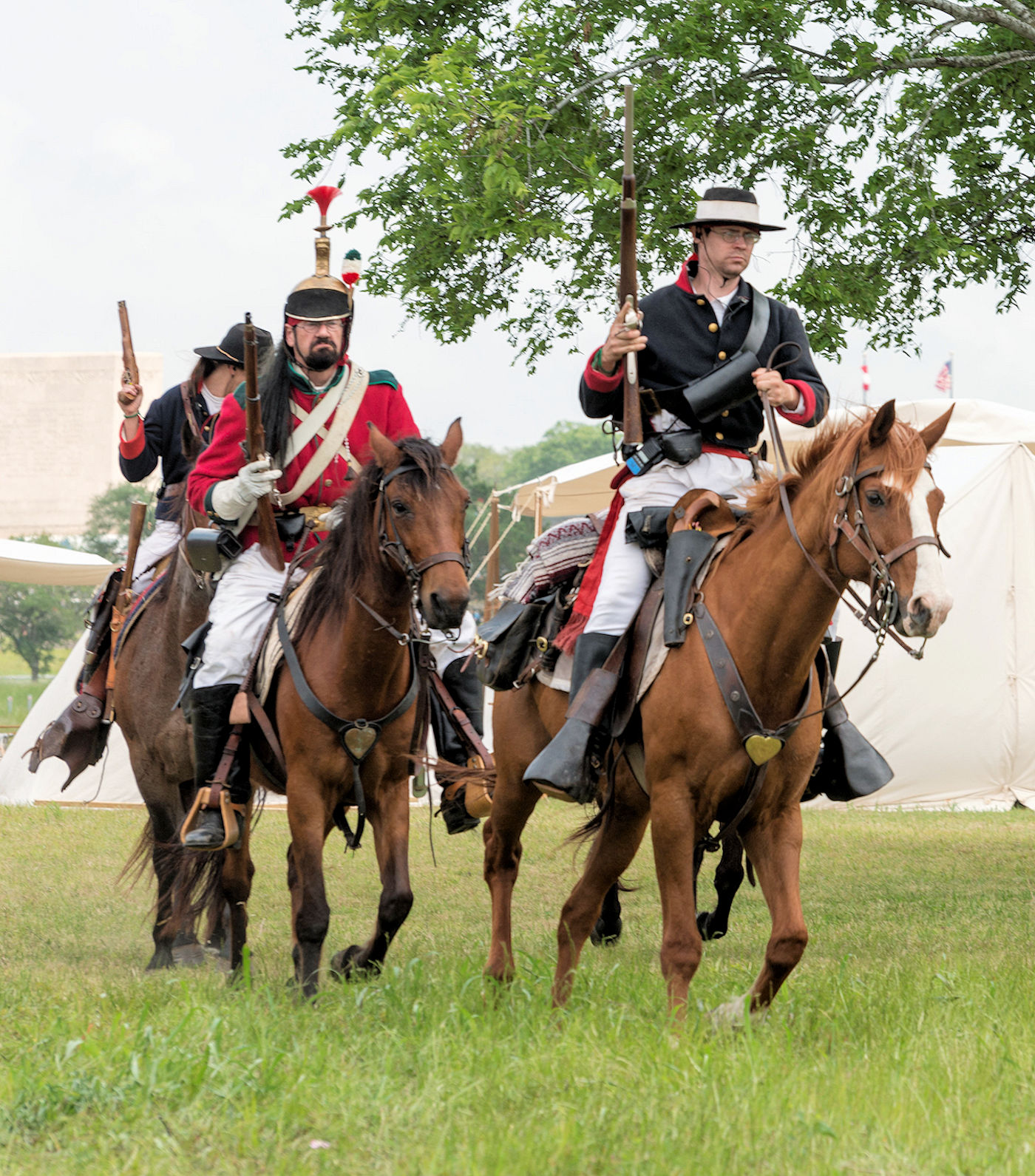
Texas Revolution Reenactments
Photo Credit: Carol M. Highsmith, Public domain, via Wikimedia Commons
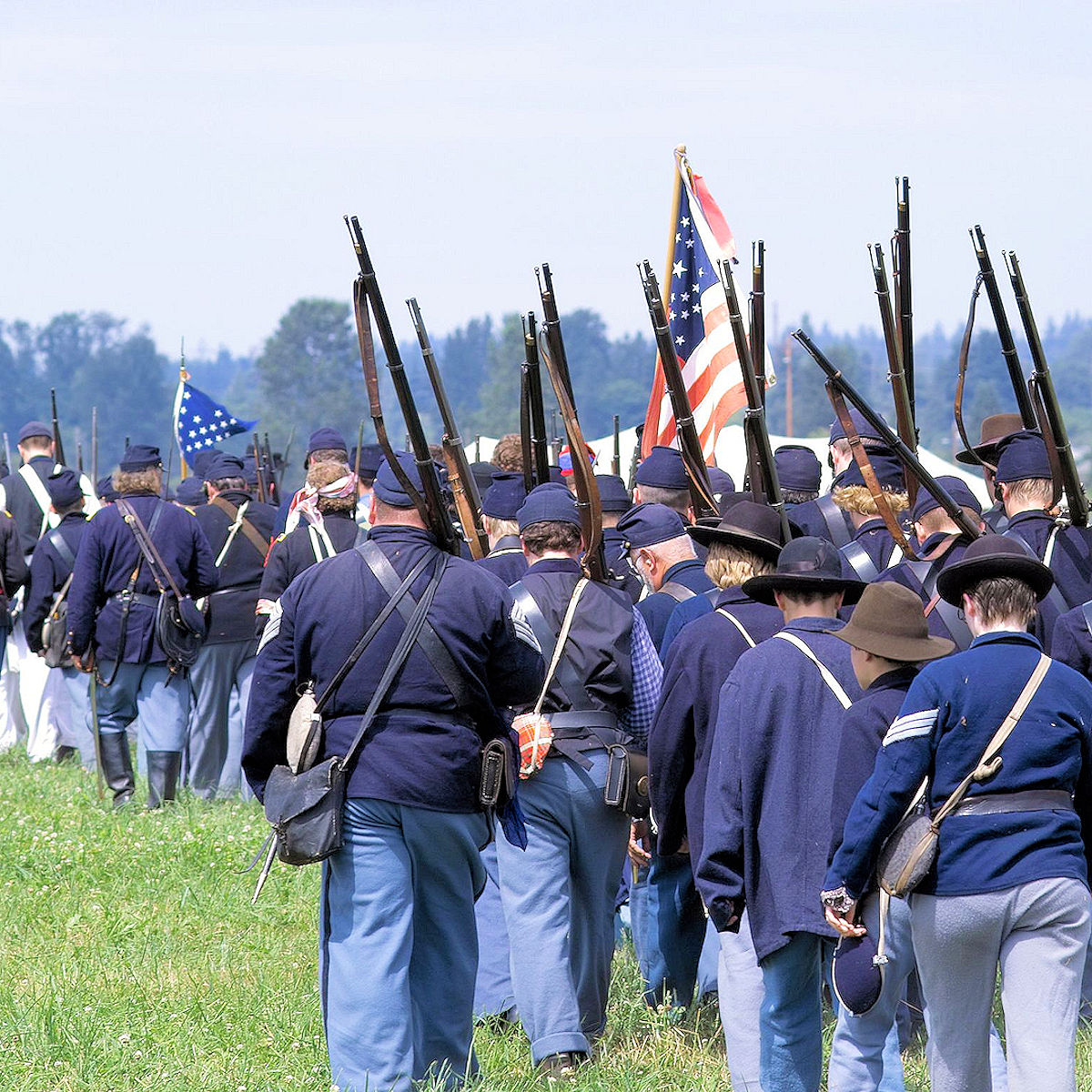
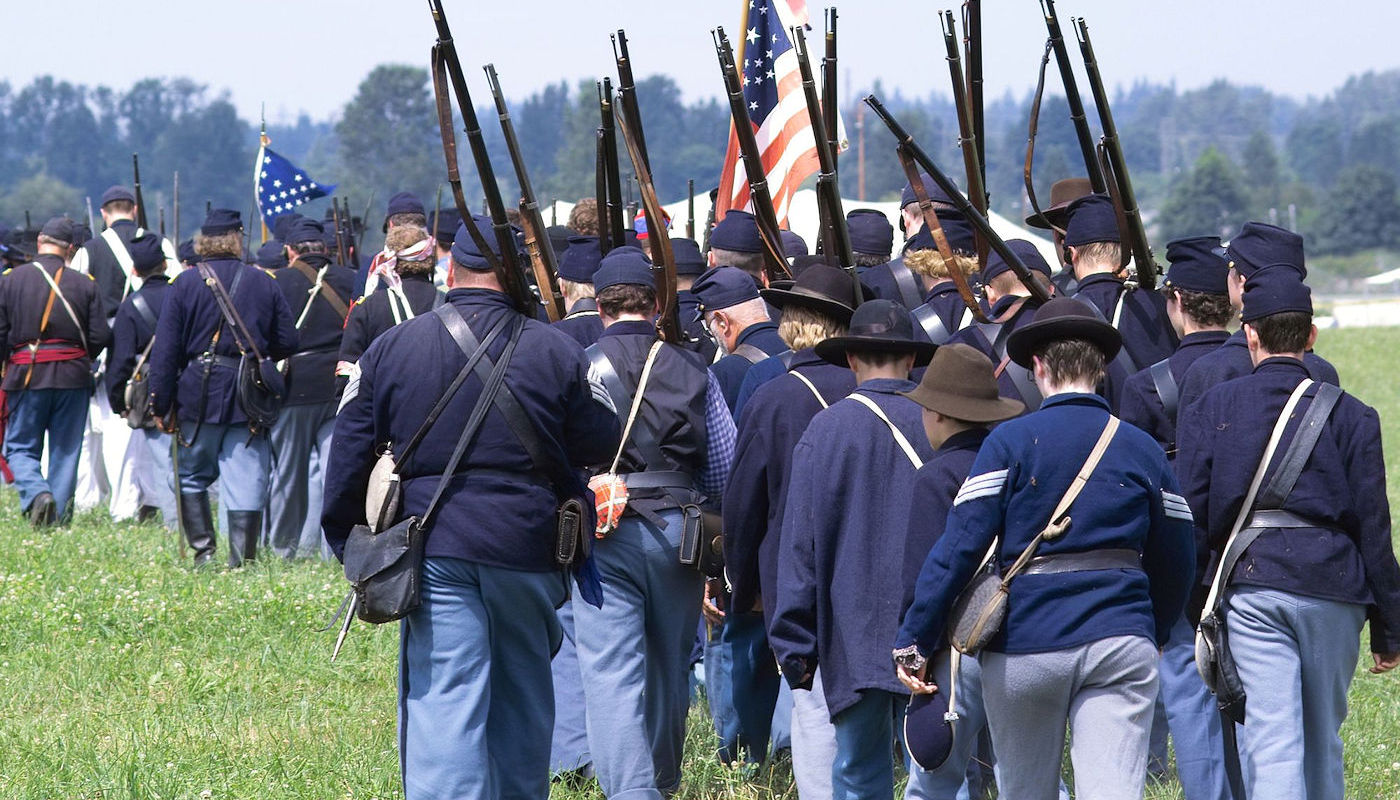
American Civil War Union Reenactors
Photo Credit: Canva
American Civil War Reenactments
Reenacting the Civil War began in earnest during the 1961-1965 Civil War centennial commemorations. These battles and events found a receptive audience, but public interest in reenactments faded by the late 1960s. Living history reenacting later grew due to the popularity of the 125th Anniversary Battles series (1986-1990) and the 130th Anniversary Battles series (1991-1995). Many historic battles and events were re-created during the 140th Anniversary Battles series (2001-2005), as well as the (2006-2010) 145th Battles Anniversary series which included more realistic reenactments of major battles such as Antietam and Gettysburg, followed by the 150th Anniversary series.
Unfortunately, mis-association of these historic battle reenactments that were taking place nationwide with racial issues following 2020 riots and protests caused some of the oldest and largest events to be changed to small living history events, if not canceled outright. Now in 2023, most of these seem to be fully reinstated, though you should check to make sure that the battle reenactments have not been removed. In one case (Genesee County Museum in Wheatland, NY), they not only eliminated the battle reenactments, they also banned any Confederate troop representation or anything related (flags) from the event entirely. Fortunately, this seems to be an exception, not a rule.
Native American Pow Wows ARE NOT REENACTMENTS
Lastly we wish to make a point that is obvious (and a bit ironic) given a little thought. All of the historical periods listed above are the more common ones reenacted by persons of any race or ethnicity who simply has an interest in them. The clothing and accoutrements of the era are researched and an outfit to match is made (or bought). In the case of military reenactors local reenactor units may be joined. Free-wheeling buckskinners have organizations as well. This is all to reenacte the material culure of a past era.
The ‘regalia’ worn by Native Americans at today’s pow wow is a representation of their current and very much ‘alive’ culture. They are not reenacting anything. In the nineteenth century, powwows “became homecoming celebrations, when families and communities separated by government removal could reunite,” according to the Smithsonian Institution. Today, powwows are held regularly all over the United States. Many ceremonies and customs were outlawed during the early reservation period. The Grass Dance being more social was one of the only events allowed. As so many Tribes were pushed together it was soon clear and necessary to transfer the traditions of the Grass Dance between Tribes. “Inter-Tribalism” began to emerge with the sharing of songs, dances, clothing, food and art. Gift giving and generosity became integral aspects of these early festivities and they are evident in any powwow today.
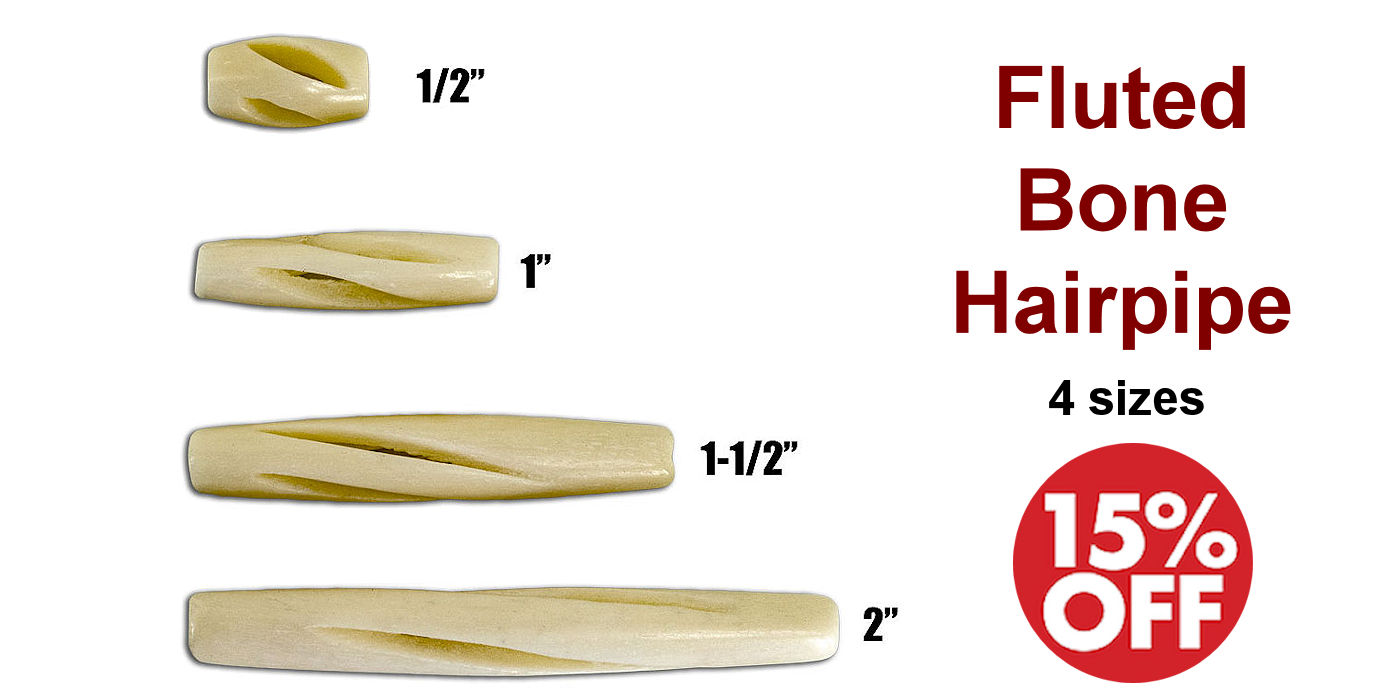
This isn’t intended to be an article on the subject, just to explain why we separate our Native American related articles and online resource information from those intended for historical reenactors. There are many blurred lines for reenactors that do relate to Native American material culture as many of the items produced overseas (i.e., glass beads and broadcloth), as well as the ubiquitous hairpipe first made of conch shell by the Dutch in New York, then of wooden pipestems and ultimaely of bone from a development partnership that inclued a Ponca chieftian, a trader, and an eastern U.S. manufacturer. Just in case someone has a ‘but’ to add, we acknowledge that some Native Americans take part in battle reenactments such as the ‘Battle of Little Bighorn’ and the ‘Dade Massacre’ of the 2nd Seminole War. These are exceptions in which they participate to tell an overall story of a shared past history.
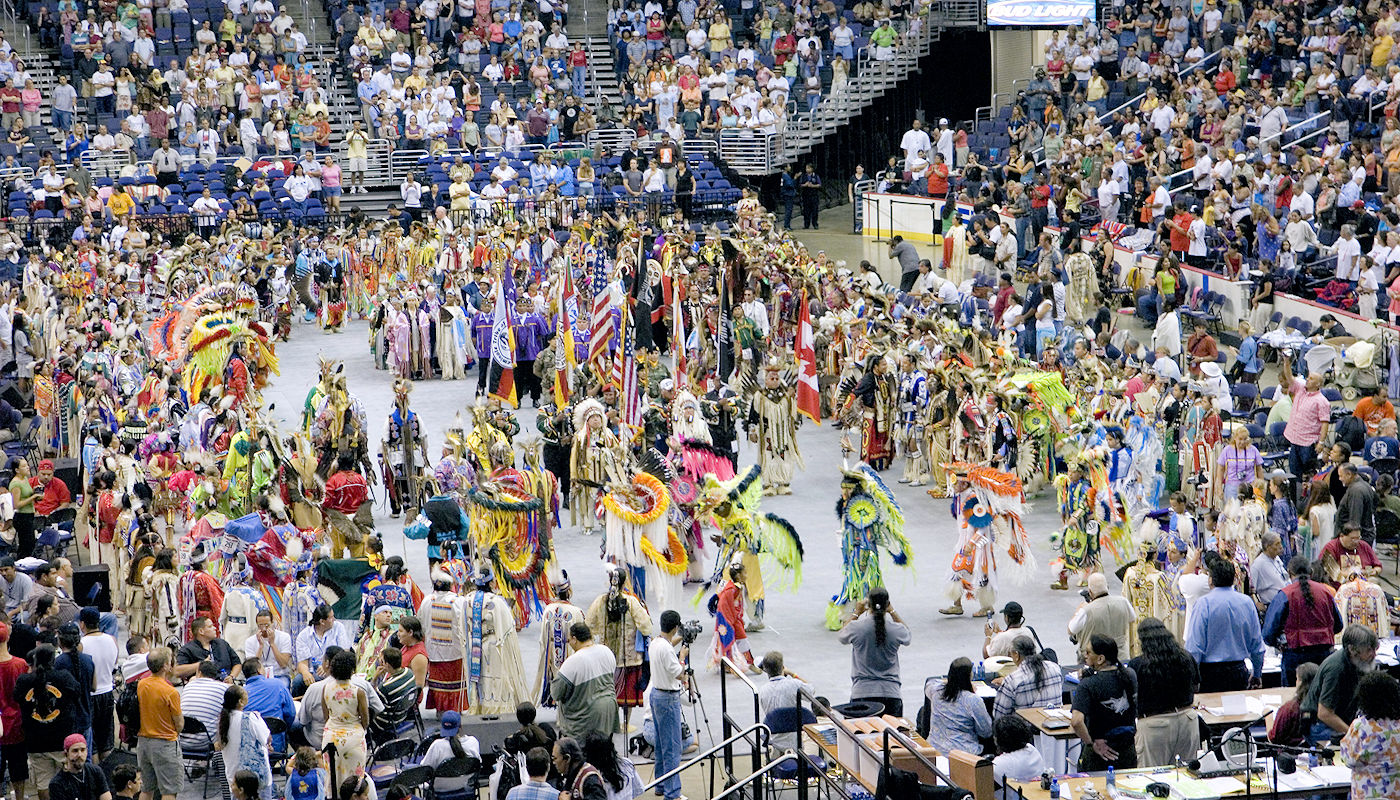
Credit Above Photo: Smithsonian Institution from United States, No restrictions, via Wikimedia Commons
The National Museum of the American Indian sponsored the National Powwow in 2002, 2005, and 2007 as a way of presenting to the public the diversity and social traditions of contemporary Native cultures. The above image is from the 2005 powwow.
Select 18th-19th Century Historic Reenactor, Rendezvous, Shooter & Camp Products from Crazy Crow
Mountain Man Clothing: Outfitting Buckskinners from Head to Foot
Whatever your historic reenactor needs (other than guns), Crazy Crow Trading Post has it! As the largest supplier of Native American Indian crafts and craft supplies (which are what rendezvous-lovers use as well) we have everything for all types of mountain man clothes and gear. From head to foot, we can outfit you (or help you make your own) to get you ready for your first (or fifty-first) mountain man rendezvous or black powder shooting event. We also supply French & Indian War, American Revolutionary War, War of 1812, and American Civil War reenactors as well.
18th & 19th Century American Historic Reenactor & Rendezvous Camp Central
We’re also your historic reenactor, rendezvous & primitive camping supply center too. From cast iron firetools and cookware to wedge tents and a great selection of personal gear, we’ll have everything to make your stay at the French & Indian War, Revolutionary War, War of 1812, rendezvous, buckskinner, voyageur, Civil War or just your own primitive camping more authentic and enjoyable.
Crazy Crow Articles
Current Crow Calls Sale
September – October 2026
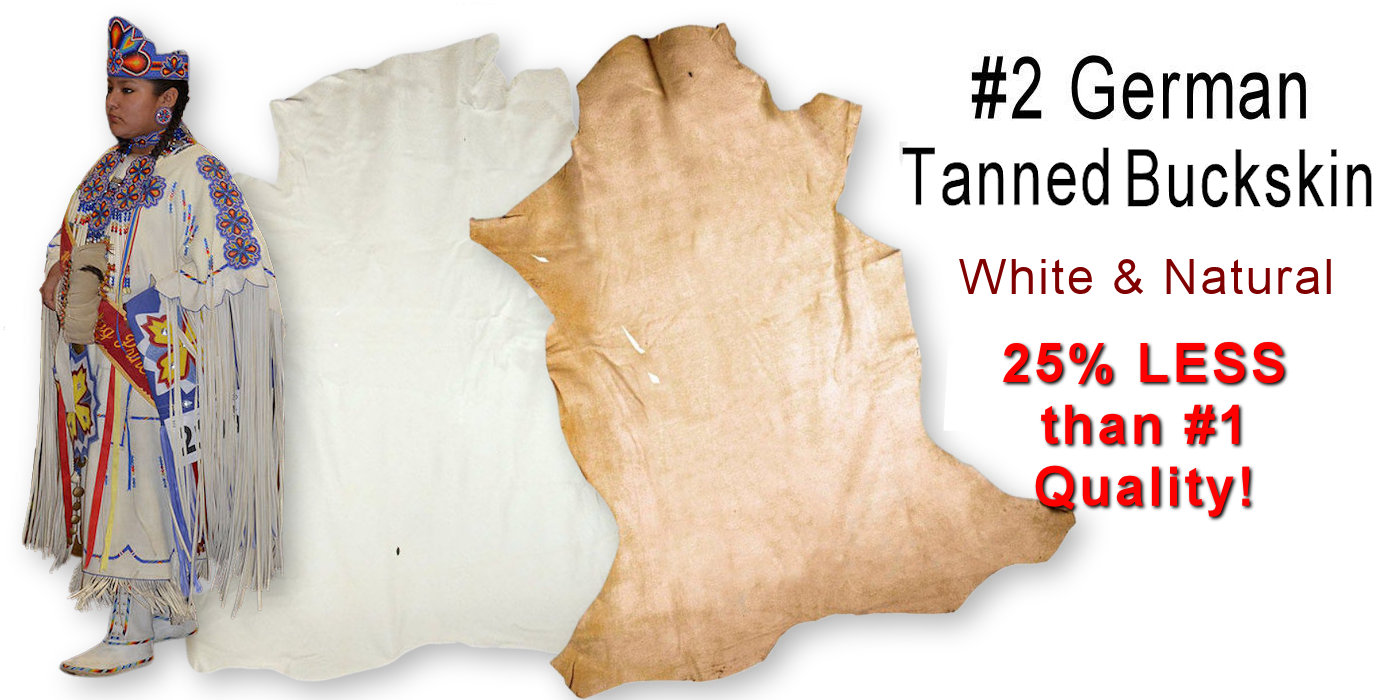
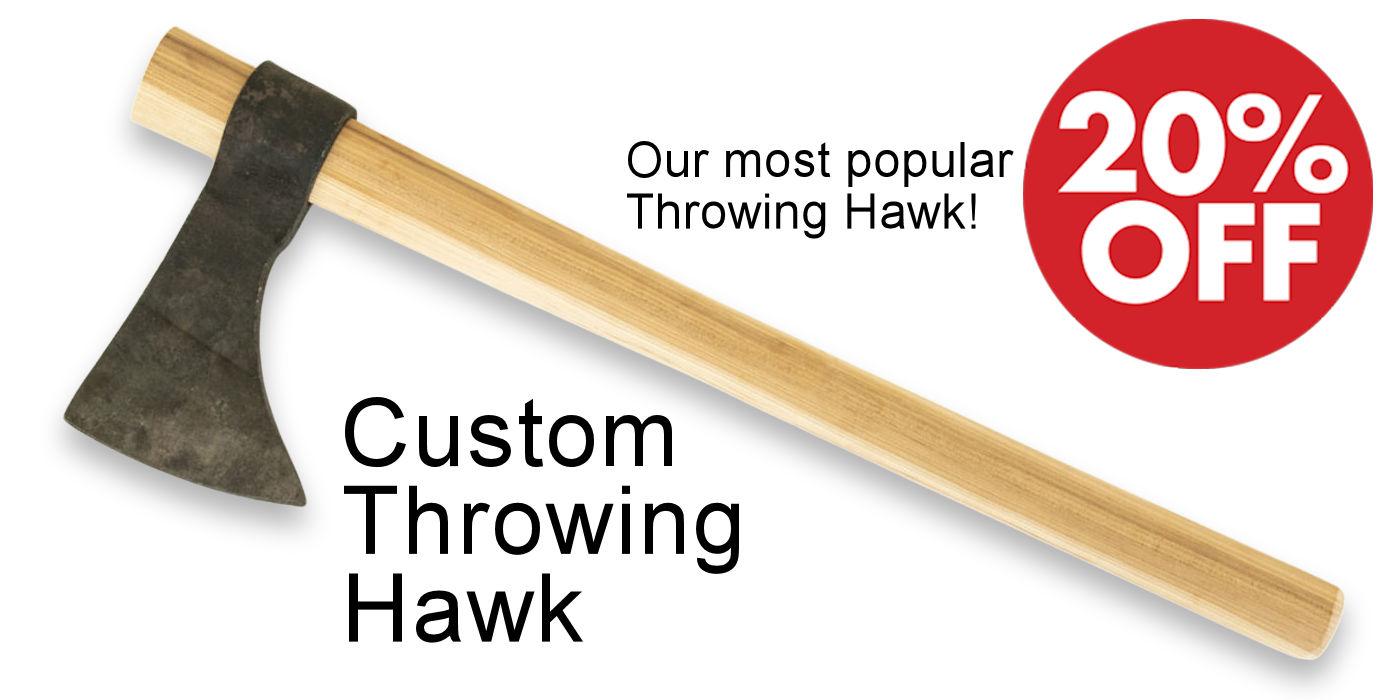
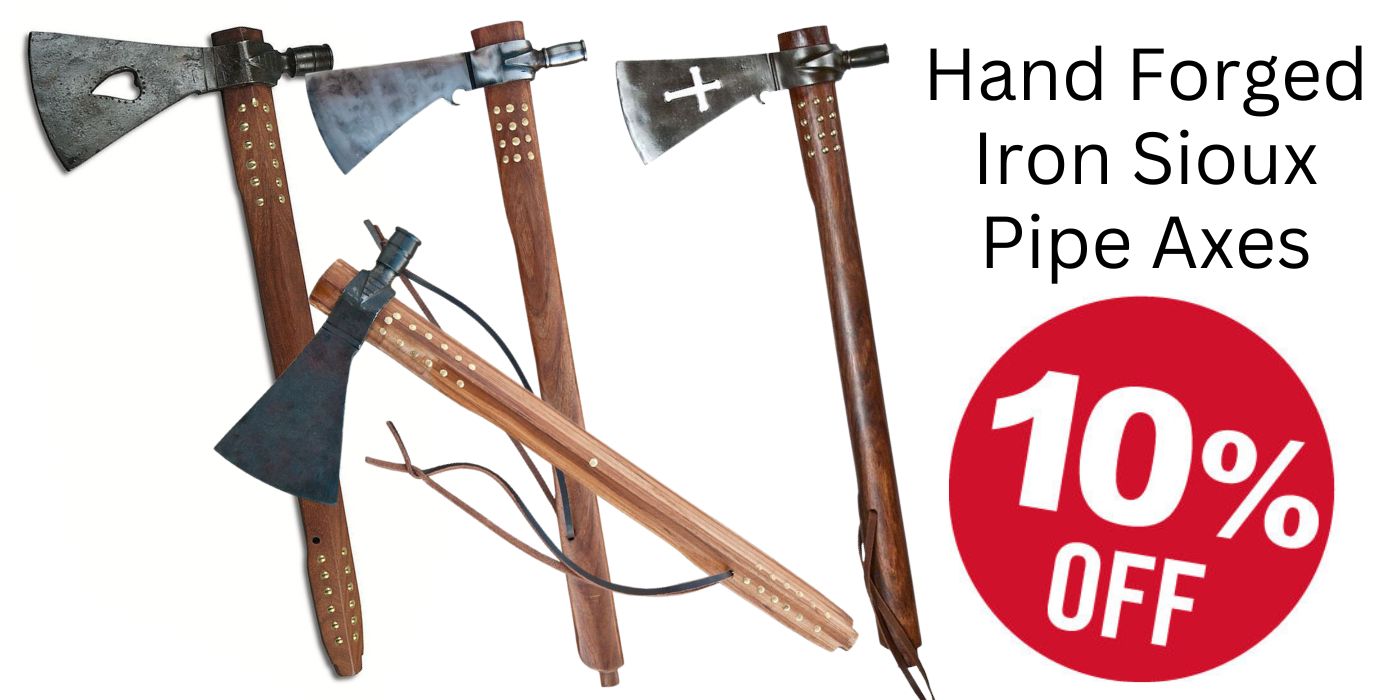
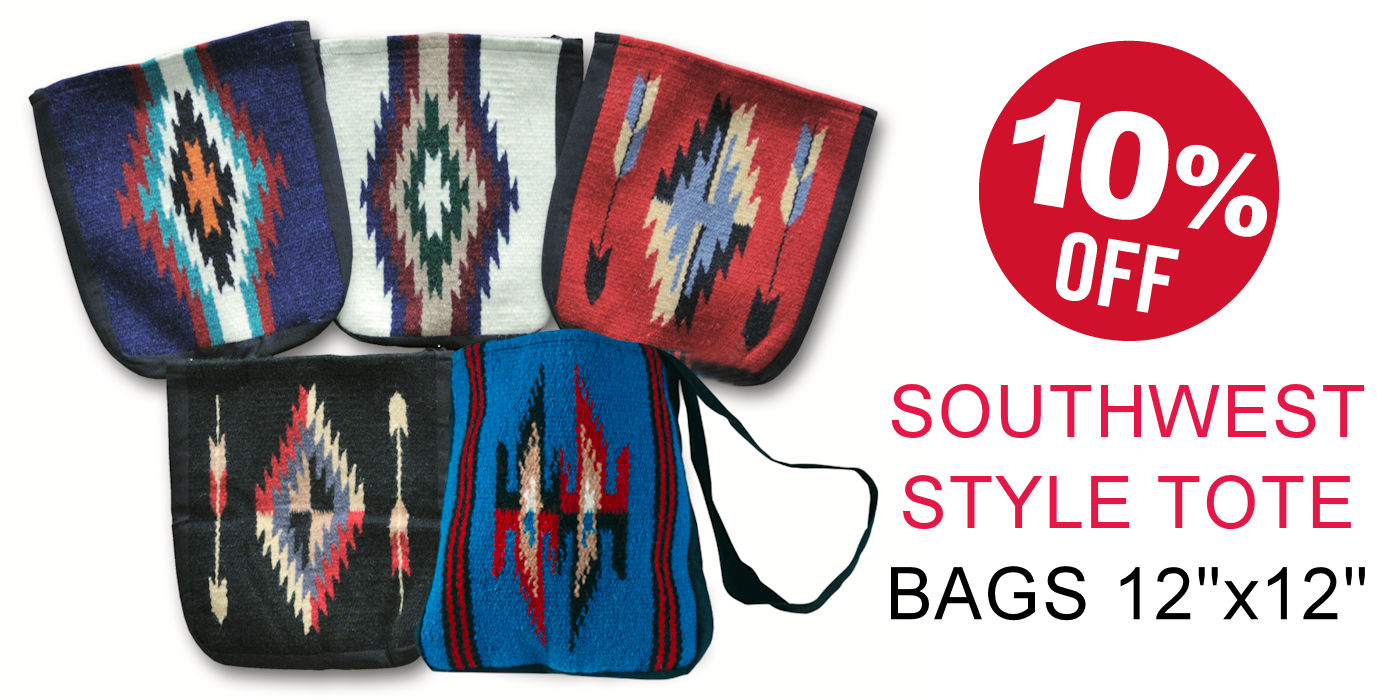
SAVE 10%-20% on popular powwow, rendezvous, historic reenactor, bead & leather crafter supplies. on Green River Knives, Custom Throwing Hawk (our most popular) & other styles, select handmade frontier knives & a wide range of camping supplies (cookware, utensils, firetools, kettles, boilers, cups, etc.). Other sale items include authentic reproduction Gorgets, Nickel & Brass Plated Bells, Sweetgrass Braids, Smudge Sticks, Genuine Buffalo Skulls & Horns, Southwest Style Totes, big savings on #2 German Tan Buckskin, and much more!